


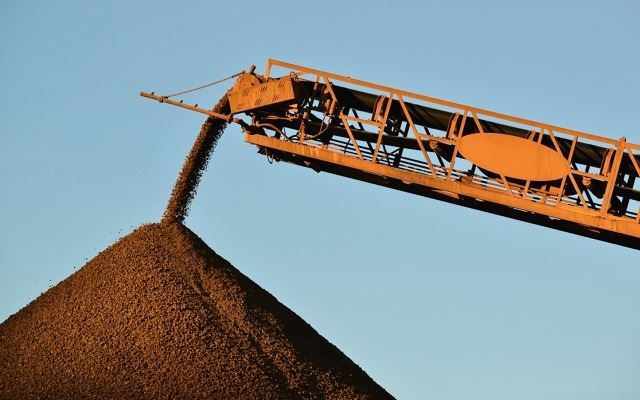
Iron ore prices have been in an uptrend since the end of 2018. The improvement of steelmaker margins since China's steel industry supply-side reform – attempts to eliminate excess steel capacity – has boosted iron ore demand and prices.
Temporary supply and demand imbalances over the past three years have resulted in a highly volatile market. Indicator Platts 62% Fe IODEX stood at an all-time high of $233.1/dmt on May 12, 2021, before falling to $106.75/dmt on October 29.
In the first ten months of 2021, the annual volatility of the iron ore indicator increased by close to 54%, higher than most others. However, after a long period of stability in 2015-2018, volatility became a regular feature of the iron ore market.
Supply struggles to keep up
Strong iron ore demand from China has been a major factor contributing to the rise in global iron ore prices since 2018.
China's crude steel production increased from 928 million metric tons in 2018 to 1.065 billion metric tons in 2020, despite the disruption caused by COVID-19. With record crude steel production of 563 million mt in the first half, it was supported by demand, including power, machinery, manufacturing and construction through 2021. Despite strict production restrictions to meet the nationwide decarbonization target and power rationing objectives in the second half, China's crude steel output is expected to stabilize at 1.065 billion mt in 2021.
India has also seen strong growth in the steel sector, though certainly on a smaller scale, causing the country's annual crude steel output to reach 100 million metric tons in 2019. Since then, growth has been affected by COVID-19. However, iron ore supply lagged behind increasing demand.
Brazil, in particular, has struggled to meet its stated goals, which has been hampered by the pandemic as well as mining accidents, extreme weather conditions and unexpected maintenance. Brazilian miner Vale's export volume fell 18.9% in 2019 and 2.4% in 2020 in annual comparisons, according to Platts cFlow iron ore shipment data. And overall, the top four Australian miners failed to fully compensate for the lower volume from Brazil, with their own exports increasing 0.5% in 2019 and 3.2% in 2020. Still, Vale remains the main source of expected growth in the years ahead. The miner aims to reach an iron ore production capacity of 370 million mt by the end of 2022.
With demand increasing so dramatically, many observers expect the market to remain tighter than in the past, at least until substantial new production starts from West Africa.
china policy
Steel mills in China are now changing their preferences for different grades of iron ore faster than ever, driven by policy changes and fluctuations in profitability.
In recent years, mills are expected to respond rapidly to a range of policies, from local production and logistical controls, outdoor regulations and nationwide capacity reductions to strategic long-term unplanned inspections for ecological and environmental protection reasons as well.
More recently, the situation was primarily one where production was curtailed, but profit margins were high, leading to a preference for high-quality and low-contaminant iron ore aimed at maximizing pig iron production.
The Platts 65% Fe and 62% Fe indices gained 46% and 42% respectively from early 2021 to May before starting the pullback, while the 58% Fe index rose 29% over the same period.
The preference for premium cargoes has resulted in much better spot market liquidity for high and medium grade iron ores compared to low grades.
Features and performance
The pandemic has affected regional steel markets in different ways. Differences in the pace of recovery between countries and regions led to a gradual recovery in iron ore demand.
Vendors were asked to ship cargo to regions first for the fastest recovery to meet blast furnace appetite, while other regions were still suffering from quarantines and plant closures. This means that beyond just China, traders need to follow global trends more sharply.
With the diversity in global freight mix preferences and the demand for certain ore types, traders have had to take a more differentiated approach to their strategy than in the past. This has led to the need for an in-depth understanding of global brand specifications and the respective technical performance of each iron ore product.
Decarbonization
Every actor in the supply chain is increasingly drawing attention to the challenge of decarbonization, from mining to shipping to steelmaking.
Under the urging of their ESG-conscious investors, miners are meticulously reviewing their operations, including their fleet of trucks and power supplies.
However, the challenges for mills are greater in scale and difficulty and will require either critical technological breakthroughs or an abundance of cleaner hydrogen.
Steel emissions are a global problem that requires both global and local solutions. Increased use of scrap, use of higher quality raw materials in production and technology upgrade are some of the possible steps on this challenging path.
In September 2020, China announced its goal of being carbon neutral by 2060, stating that the world's largest steelmaker is ready to embark on this transformative journey. It will be interesting to see how much of a leadership role the Chinese steel industry will play in this global effort.



Comments
No comment yet.