


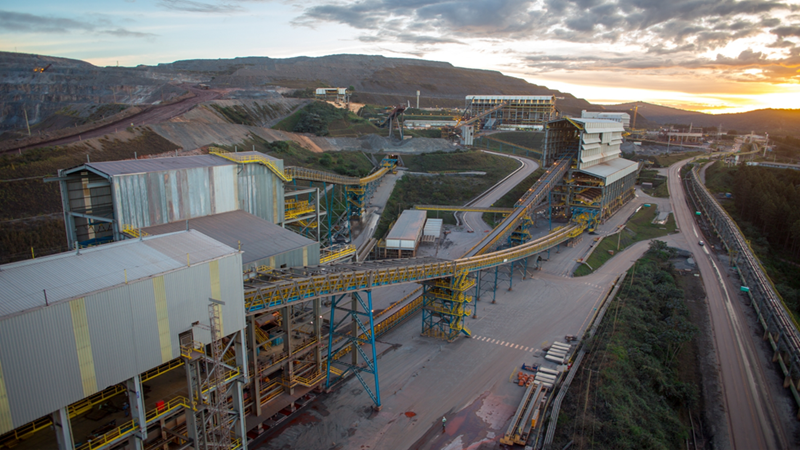
The project, implemented in the city where the company was founded 84 years ago, aims to redefine efficiency, safety, and sustainability standards in mining through a data-driven and integrated production model.
The transformation at the Conceição 2 plant, which has an annual production capacity of 11.2 million tonnes, took approximately 1.5 years and involved the implementation of 51 different improvement initiatives. More than 100 camera systems were installed, while over 7,300 pieces of equipment and sensors were integrated into the automation infrastructure. AI-powered systems now monitor and optimize more than 400 production variables in real time.
Vale’s Executive Vice President of Operations, Carlos Medeiros, emphasized that the project is more than a technological investment, stating: “Usina Modelo lays the foundation for a safer, more predictable, and more efficient production structure. This model represents a new operational approach that will enhance competitiveness in mining.”
The new system enables real-time analysis of production processes and automatic adjustments based on ore characteristics. This not only improves product quality but also helps identify potential failures in advance, minimizing unplanned downtime. AI-based control mechanisms reduce human intervention while ensuring more stable and safer operations.
The project's results have already become evident. During the pilot phase, plant productivity increased by 25%, while production reached 9 million tonnes in 2024. The facility is expected to achieve its full capacity of 11.2 million tonnes by 2026.
Significant gains were also achieved in product quality. Production of pellet feed, a key raw material for low-carbon steelmaking, increased by 40%. Environmental performance improved as well. Thanks to advanced analysis technologies used in ore processing, the iron content in waste was reduced by 26%, enhancing resource efficiency and reducing waste volumes.
Substantial progress was also made in water management. Approximately 92% of the water used at the facility is recovered and reused in the production process, minimizing natural resource consumption and supporting sustainability goals.
The transformation has also delivered improvements in occupational health and safety. Through automation, remote-control systems, and mechanical intervention solutions, employees’ physical exposure to high-risk areas has been significantly reduced. Operations are now largely managed from control centers, with on-site intervention required only when necessary.
Vale’s Chief Technology Officer, Rafael Bittar, stated that the plant’s digital maturity has advanced significantly, noting: “Operational decisions are now fully supported by advanced systems. This provides a safer and more predictable production environment while increasing efficiency.”
The project was developed in strategic partnership with ABB, which provided support in system integration, automation, and electrification, enabling different technologies to operate seamlessly together. Fausto Almeida, ABB’s Mining Director for South America, said the project offers a benchmark transformation model for the industry.
The Usina Modelo program also stands out for its investment in workforce development. More than 2,800 hours of training were delivered to the plant’s 122 employees, with a focus on strengthening digital competencies. Simulations and virtual reality-based training programs were used to facilitate adaptation to the new system.





Comments
No comment yet.