


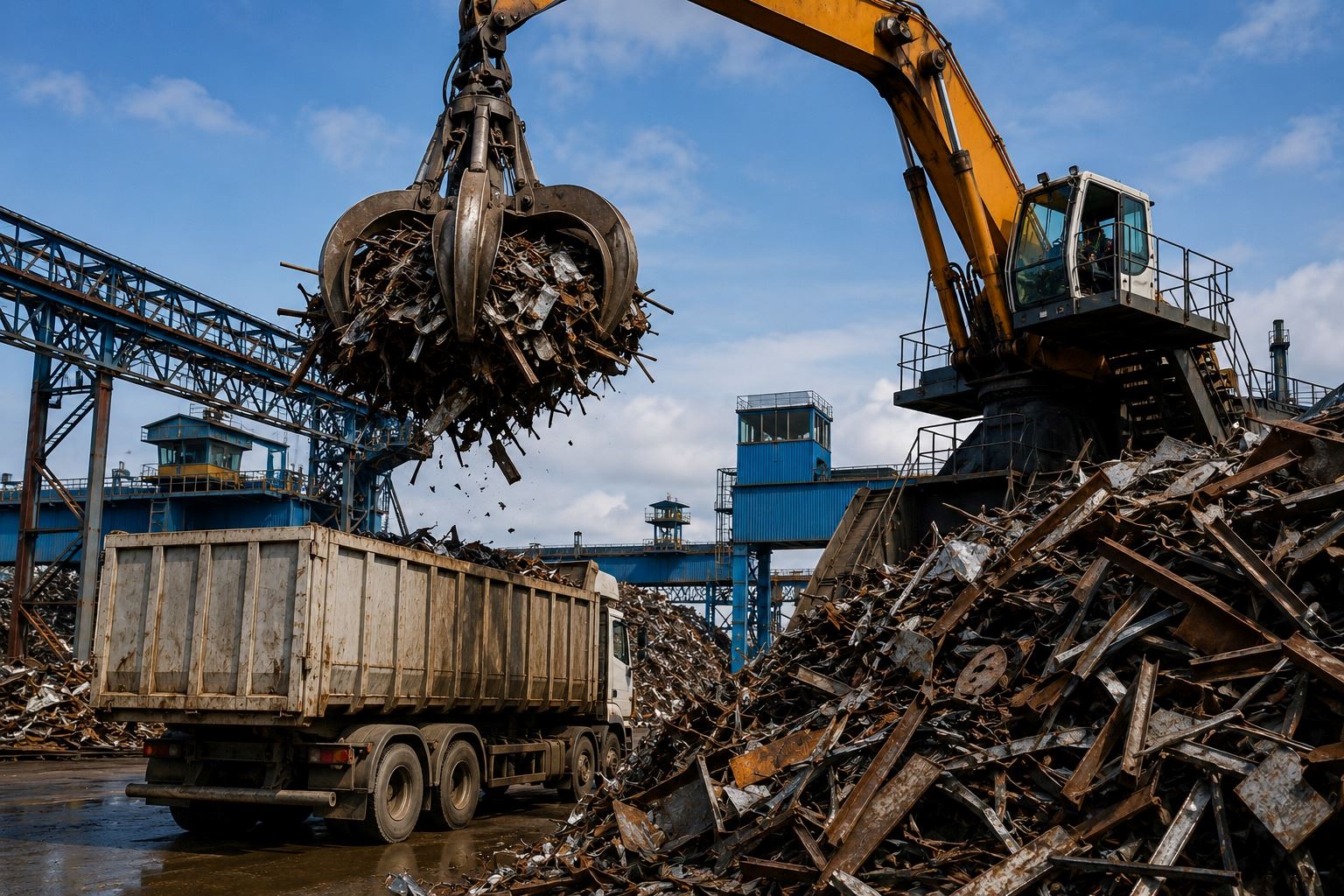
Expectations for the Turkish scrap market in September point to moderate demand and largely sideways price movement. Market sources state that some suppliers restricted scrap supply in August in order to benefit from a possible price increase in September. However, the return of this additional supply to the market is not expected to put downward pressure on prices. Due to the current scrap shortage, prices are expected to remain at least at their current levels.
Logistics Costs Continue to Pressure the Market
Low water levels in rivers, particularly in Germany, the Netherlands and Belgium, are significantly restricting scrap shipments in Europe. Disruptions in river transportation are forcing cargoes to shift to rail and road, bringing additional issues such as limited railcar availability and high fuel costs.
Meanwhile, high and volatile freight rates for both sea and road transportation are also reducing market predictability. Fluctuations in oil prices continue to stand out as another important risk factor for both road and sea transportation costs.
A delay of around 2-3 weeks is currently being experienced in scrap supply across the EU. It is stated that this delay, which is generally seen following the waves occurring in early June and around mid-August when the general public goes on holiday, could further tighten supply in the coming weeks.
Turkish Buyers' Demand Closely Monitored
On the Türkiye side, September demand is not yet showing a strong outlook. Therefore, while mills are expected to continue purchasing scrap, the extent to which demand strengthens will be a key factor determining the direction of prices.
Weak rebar sales and pressure on producers' cash flow are preventing scrap demand from gaining strong momentum. On the other hand, it is considered that mills may continue to turn toward deep-sea scrap due to difficulties in sourcing alternative raw materials such as billets and pig iron.
Continued problems with billet and pig iron shipments from the Black Sea, together with uncertainties stemming from the war and logistics, are making raw material procurement more difficult. The ongoing Russia-Ukraine war at a high intensity is also keeping market risk perception elevated.
Quotas Limit Market Movement
Due to European Union quotas, very strong market activity is not expected in September. It is stated that quotas may allow for a limited increase in prices, but a strong upward movement does not appear likely at this stage.
At the same time, the fact that September marks the period when the construction season begins to regain momentum could create an important opportunity for a recovery in demand for finished steel products. Market participants point out that, for prices to move sustainably higher, there first needs to be at least some increase in demand for finished products.







Comments
No comment yet.