


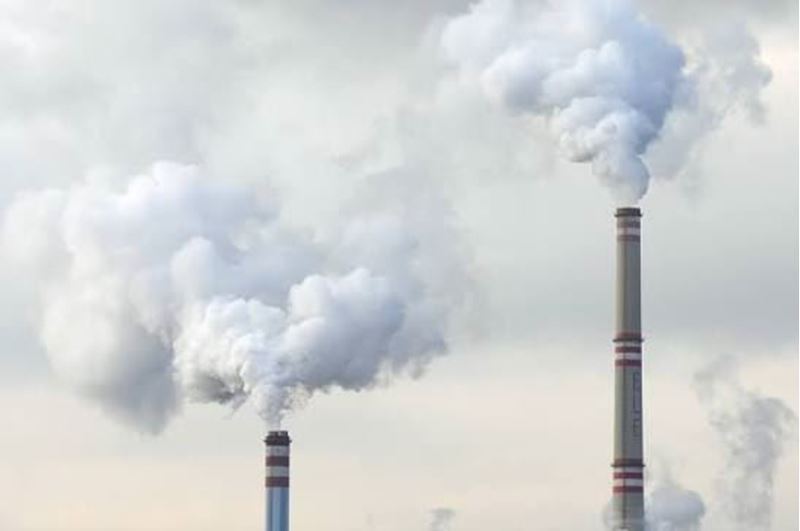
The Emission Trading System (ETS) Regulation, which establishes the legal framework for Türkiye’s national carbon market, was published in the Official Gazette and entered into force as of August 27, 2026. The regulation sets out the basic operating rules of the market, where greenhouse gas emissions will be monitored and reported and companies will be able to buy and sell carbon allowances.
Under the new system, Category B and Category C installations with annual emissions exceeding 50,000 tonnes of CO₂ equivalent will be included in the ETS. Schools, universities, hospitals and defense industry facilities will be exempt from the system. However, their obligations to monitor, report and verify emissions will continue.
Greenhouse gas emission permits will be mandatory
Businesses covered by the ETS will be required to obtain a greenhouse gas emission permit, valid for five years, from the Climate Change Presidency in order to continue their activities.
Applications for permit renewal must be submitted at least six months before the expiry of the existing permit. Businesses that will be included in the system will be granted a three-year transition period to obtain their emission permits. The Carbon Market Board may extend this period by up to two years.
A portion of allowances will be distributed free of charge
Under the ETS, the total amount of greenhouse gases that businesses may emit will be determined through an emissions cap, and allowances will be issued through the Transaction Registration System.
While a portion of the allowances will be distributed free of charge based on the production level and emission intensity of the installations, the remaining portion will be offered for sale through auctions in the primary market.
The operator of Türkiye’s carbon market will be Energy Exchange Istanbul (EPİAŞ). Allowances will also be able to be bought and sold through continuous trading in secondary markets.
A market stability reserve will be established to limit excessive fluctuations in prices. The Carbon Market Board may determine minimum and maximum price ranges when necessary.
Businesses will be required to surrender allowances corresponding to their verified emissions by the last business day of November of the following year.
Violations may result in fines of millions of liras
If a verified emissions report is not submitted on time, an administrative fine ranging from TL 627,450 to TL 6,274,500 will be imposed. For installations covered by the ETS, this fine may be doubled.
Businesses operating without a greenhouse gas emission permit, or with an expired or revoked permit, may be subject to administrative fines ranging from TL 1,254,900 to TL 12,549,000.
The system will begin with a pilot implementation
Türkiye’s Emission Trading System will initially be launched through a pilot implementation, the scope and duration of which will be determined by the Carbon Market Board.
Businesses included in the pilot scope will be required to submit their first Monitoring Methodology Plans within two months from the date the regulation is published.
The regulation, consisting of 42 articles, 6 provisional articles and 7 annexes, sets out the procedures and principles regarding the scope of the ETS, the emissions cap, the allowance mechanism, market flexibility instruments, the market stability reserve, and monitoring, reporting and verification.
Institution: Our green transformation process will accelerate
Following the publication of the regulation, Minister of Environment, Urbanization and Climate Change Murat Kurum stated that the legal framework for the Emission Trading System and the carbon market had been established.
Kurum said the regulation would accelerate Türkiye’s green transformation process, contribute to maintaining competitiveness in international trade and support green employment.







Comments
No comment yet.