


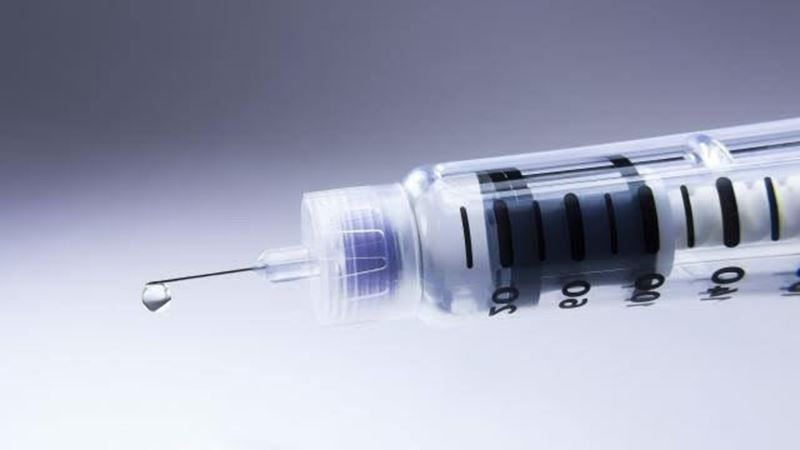
The company stated that following trials conducted with leading manufacturers, it established a stable supply system that meets the quality and consistency requirements of laser welding processes.
Laser welding enables the use of thinner materials
In the insulin needle industry, the shift from conventional TIG or plasma welding methods to laser welding is gaining momentum. Laser welding enables higher welding speeds while also allowing manufacturers to use thinner base materials from the initial production stage.
In this context, materials with a thickness of around 0.08 mm can now be used instead of the previously used thickness of approximately 0.2 mm, representing a reduction of more than 50%.
Demand for reduced pain during injections is also driving the use of ultra-thin needles such as 30G, 31G and 32G, particularly in compact pen-type injectors.
NK-304NKM is used in medical applications
Nippon Kinzoku stated that its NK-304NKM stainless steel, used in thin-walled welded tubes for medical and cosmetic applications, offers stable weldability and high drawability.
According to a survey conducted by the company in March 2026, Nippon Kinzoku holds a market share of approximately 57% in Japan and around 55% in major overseas markets for these products.
To minimize welding defects, the cut surface ratios of the materials are carefully controlled. The products also offer stable weldability over coil lengths of up to 4,000 meters, high-precision thickness and width tolerances, high ductility, and strength in the welded area.





Comments
No comment yet.