


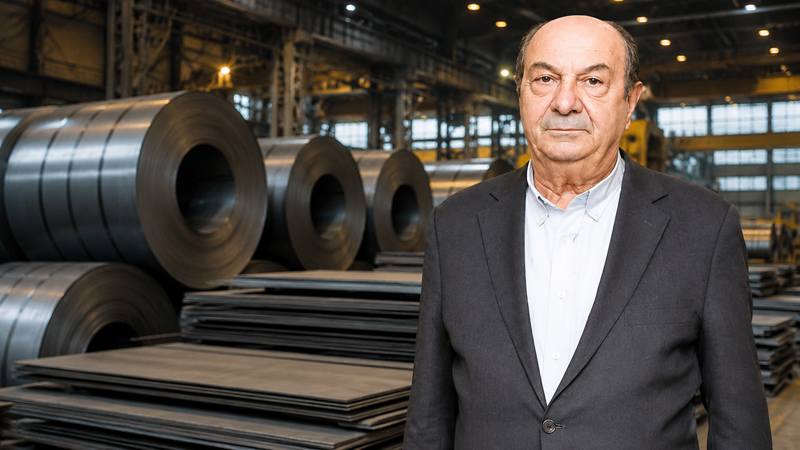
When we entered the office of Mehmet Başaran, Chairman of the Board of Habaş Group, together with Hakan Güldağ, he was on the phone. We could not help but overhear part of the conversation:
“Unfortunately, there are companies cutting prices in the iron and steel market, but we cannot follow the same path. How long and to what extent can companies continue selling at a loss? Does this make any business sense?”
After ending the call, he turned to us and expressed his concerns:
“Türkiye has become a dumping ground for market for iron and steel products. Steel products are entering the country from many regions of the world, particularly the Far East. Some domestic producers have also started cutting prices excessively. They are selling products below cost, putting the entire sector under pressure.”
Mehmet Başaran explained that some domestic producers justify their aggressive price reductions as follows:
“Under the inflation-control program, interest rates remain high. In addition, banks continue to restrict access to working capital financing. Some market players are choosing to cut prices and generate cash flow rather than rely on expensive credit facilities.”
He emphasized the following point:
“Countries around the world protect their steel industries through customs duties and trade measures. Türkiye has become an open market for global steel producers.”
While listening to Başaran’s remarks, I recalled my conversation with Fuat Tosyalı, Chairman of the Board of Tosyalı Holding, during the “Ufuk Turu” meeting organized by ekonomim.com on February 28, 2026, where Treasury and Finance Minister Mehmet Şimşek delivered a presentation.
During that discussion, which Minister Şimşek also followed closely and took notes on, Fuat Tosyalı first highlighted the strategic importance of the steel industry:
“No nation can be considered independent without a steel industry. Today, steel is one of the key players at the center of global trade wars.”
He noted that Türkiye ranks seventh worldwide in steel production:
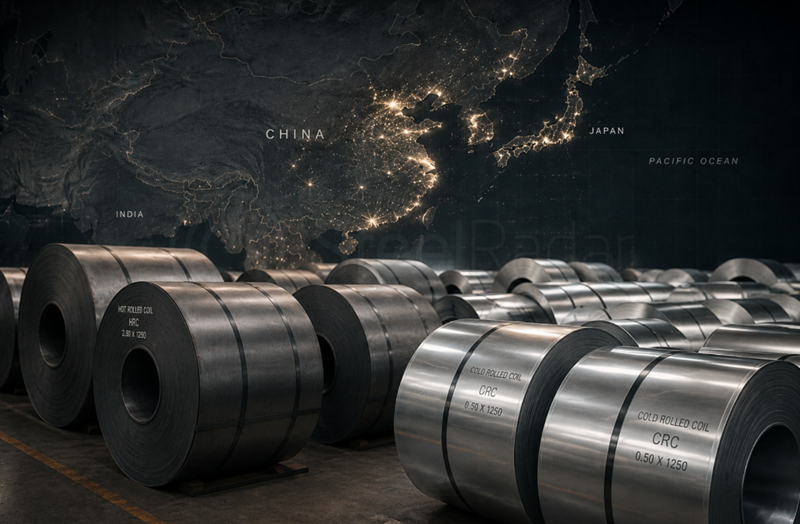
“Our sector has been under intense external pressure for a long time. For many years, we competed against state-supported and subsidized steel products from Russia and Ukraine. Over the past four to five years, the situation has changed. This time, we are facing a wave of Chinese imports. Destructive competition has turned into a form of competition that threatens the survival of producers.”
Despite Türkiye's significant steelmaking capacity, he pointed out that the country imported 19 million tonnes of steel last year and drew attention to the European Union:
“The EU is also taking measures against Turkish steel. Despite the Customs Union and free trade agreements, it has introduced quota restrictions. They have attempted to limit steel imports under various mechanisms, and later reduced these quotas even further.”
To explain the situation in greater detail with supporting data, Mehmet Başaran called executives responsible for different business units, ranging from rebar to flat steel products, into his office.
The first executive, responsible for the long products segment, stated:
“Some domestic producers that are reducing prices to compete with imports are selling construction rebar at around USD 565 per tonne. However, our production cost is approaching USD 590 per tonne. The same product enters Türkiye from China at around USD 530 per tonne on a delivered-to-port basis.”
Serdar Kilimci then shared export and import figures for flat steel:
“During the first five months of this year, Türkiye exported 1 million tonnes of flat steel, while 1.5 million tonnes of imported flat steel entered the market.”
He emphasized that steel imports were coming from countries including Egypt, Malaysia, Mexico, and North Macedonia:
“Egypt applies anti-dumping duties on our sector. As a result, we can export products to Egypt only with around 50% customs duties applied. While 140,000 tonnes of steel products entered Turkey from Egypt, we were able to sell only 40,000 tonnes to that market.”
He also gave an example from France:
“Around 100,000 tonnes of flat steel products are imported into Türkiye from France. Our exports to France remain limited, barely exceeding 5,000–10,000 tonnes.”
He then turned to the UK market:
“Türkiye signed a Free Trade Agreement (FTA) with the United Kingdom. Shortly afterwards, the UK introduced quotas on Turkish steel. Products exceeding the quota are subject to an additional 50% customs duty, which directly impacts pricing.”
The Turkish iron and steel industry has been highlighting for some time that dumped imports are creating unfair competition in the domestic market and has been calling for protective measures to address the issue.
Türkiye’s transformation into a dumping ground from the perspective of the global steel industry appears to have pushed domestic competition toward a level of “destructive competition.”
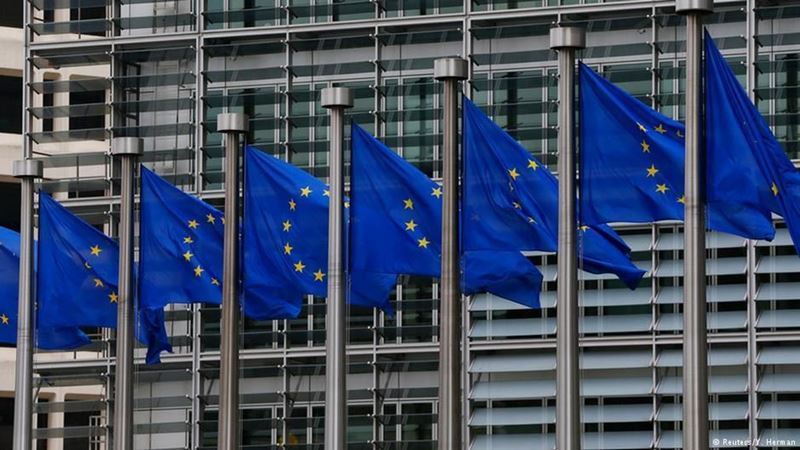
The European Union continues to reduce quotas on Turkish steel
Mehmet Başaran asked Serdar Kilimci to explain the European Union’s decisions regarding Turkish steel exports in more detail. Kilimci went back to 2012–2013:
“Türkiye exported nearly 400,000 tonnes of flat steel products to EU countries for the first time during the 2012–2013 period. Major European steel producers objected to our exports.”
He recalled that Habaş entered the EU flat steel export market in 2018:
“As a result, Türkiye's flat steel exports to EU countries increased. Eventually, the EU introduced a global quota system. However, major steel producers within the EU considered this insufficient, and after a period of time, the system was changed to country-specific quotas.”
He noted that Türkiye's exports to EU countries increased during the pandemic period in 2020:
“Following this increase, the EU reduced Türkiye's quota to 600,000 tonnes. This was not considered sufficient, and later the quota was reduced further to 400,000 tonnes.”
He highlighted that the EU implemented another reduction effective from July 1, 2026:
“Our flat steel export quota to EU countries has now been reduced to 160,000 tonnes.”
Bringing Türkiye's Manufacturing Strength Together with a Global Brand Journey
The decision by Eve Seramik, a long-established company based in Çorum, to go public under the name “İsvea Seramik” caught my attention, so I asked Erdem Çenesiz, Chairman of the Board of Ece Holding:
“Why did you choose to bring the ‘İsvea’ brand to the forefront when preparing for the IPO?”
Erdem Çenesiz, who is also Chairman of the Board of İsvea Seramik, began his response as follows:
“Ece Holding consolidated all of its bathroom-related operations under the ‘İsvea’ brand, bringing together not only its companies but also its vision under a single global brand identity.”
He emphasized that Italy’s design culture and Turkey’s manufacturing capabilities have been combined within the same business structure:
“As a result, we have created an integrated production ecosystem consisting of five factories covering sanitaryware ceramics, FFC kitchen sinks, concealed cistern systems, toilet seats, and bathroom furniture.”
He noted that with the integration of Ece Banyo into İsvea, the company has become part of a stronger brand structure both in domestic and international markets:
“We did not view this merger merely as an operational decision. When we evaluated global transformation trends, Turkey’s manufacturing capabilities, and the opportunities that will emerge in the coming period, we believed that İsvea had the potential to achieve a much greater growth trajectory.”
He stressed that the objective was not limited to raising financial resources:
“Our aim was to establish a permanent corporate structure that is more institutionalized, more transparent, sustainability-focused, and capable of competing on a global scale. The strong interest shown by investors demonstrates that this vision has been recognized by the market.”
He stated that 65% of the proceeds generated from the public offering would be allocated to new investments:
“Our priority will be to accelerate investments in sustainability, productivity improvements, digitization, automation, and advanced technologies that will provide cost advantages. These investments will significantly strengthen our international competitiveness.”
He recalled that production is carried out in the heart of Anatolia:
“This is not merely an emotional choice; it is also a significant competitive advantage. The advantages we have in terms of energy costs, workforce, logistics, and production efficiency will become even more prominent with the investments we have planned.”
He stated that half of the company’s revenues are generated through exports:
“Our goal is to become a Turkish company recognized globally not because of its pricing, but because of its design capabilities, technology, innovation, and brand value. We consider İsvea’s IPO as one of the most important milestones in this long-term global growth journey.”
He emphasized that global competition is no longer won solely through cost advantages:
“Competition is won through technology, design, sustainability, and strong brands. As İsvea, we have initiated this transformation. We believe that the steps we are taking will not only transform our company but also improve the international perception of the Turkish sanitaryware ceramics industry.”



Comments
No comment yet.