


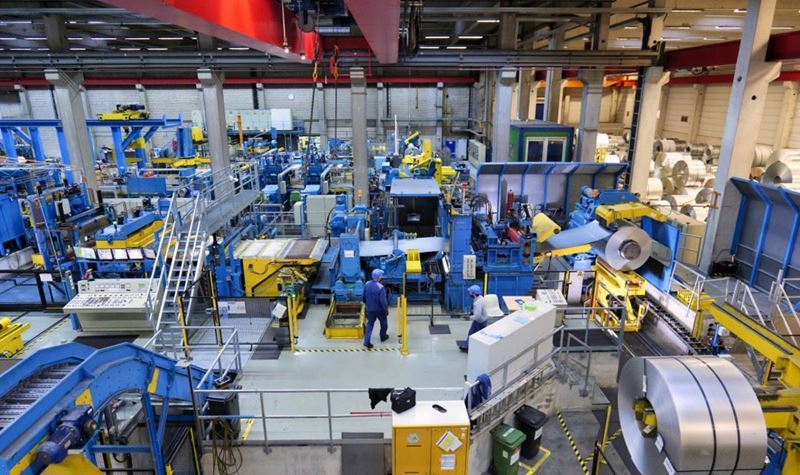
Under the agreement, the steel will be supplied from Stegra’s new plant currently under construction in Boden, Sweden, with the first deliveries expected to begin in 2027. Total supply volumes are reported to reach high six-digit tonnage levels.
Within the scope of this long-term agreement, thyssenkrupp Materials Processing Europe will distribute the lower-grade steel purchased from Stegra to its customers across Europe in the automotive, construction, and various industrial sectors. The company emphasized that its broad customer base, logistics network, and processing capabilities position it well to manage these volumes.
Commenting on the agreement, Heather Wijdekop, CEO of the Processing Business Unit at thyssenkrupp Materials Services, stated: “We have the customer structure and operational capacity to process this large volume of steel. At the same time, by partnering with Stegra, we are supporting the commissioning of their large-scale facility in Boden and contributing to the decarbonization efforts of the steel industry.”
Stegra is continuing construction of its new facility in Boden, where steel will be produced exclusively using renewable electricity and green hydrogen. Due to the inherent characteristics of steel production processes, lower-grade steel is generated, which represents a significant share of the European market as a suitable material for many applications that do not require the highest quality standards.
Stephan Flapper, Chief Commercial Officer of Stegra, highlighted the strategic importance of the agreement, stating:“Having a reliable partner for lower-grade steel is a critical factor for the sustainable ramp-up of our production capacity. We see this agreement with thyssenkrupp Materials Services as the beginning of a long-term partnership. Together, we can further stimulate demand for steel products produced using green hydrogen.”
Although the steel will be produced using renewable energy sources at the Boden facility, the lower-grade steel purchased by thyssenkrupp Materials Services under this agreement will not be classified as CO₂-reduced. This is because Stegra will allocate the low-carbon attributes of its production to premium-grade steel customers through Environmental Attribute Certificates (EACs). The company announced its first agreement related to the EAC system in September 2025.





Comments
No comment yet.