


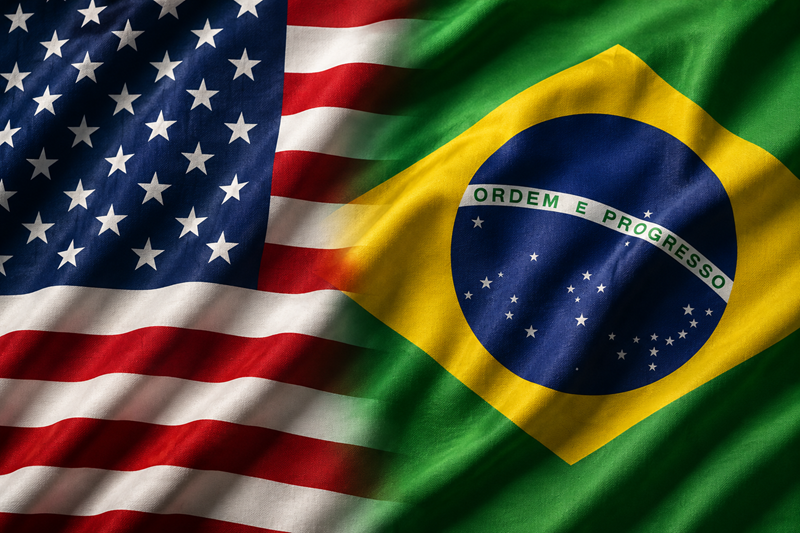
The decision was taken following an approximately one-year investigation conducted by the Office of the United States Trade Representative (USTR). The investigation concluded that certain Brazilian practices related to digital trade and electronic payment services, preferential tariff arrangements, anti-corruption measures, intellectual property rights protection, ethanol market access, and illegal deforestation were found to burden or restrict U.S. trade.
USTR stated that, prior to reaching its decision, it held two public hearings, received more than 360 written submissions, and conducted extensive consultations with the Brazilian government.
U.S. Trade Representative Jamieson Greer stated that protecting American economic interests against unfair trade practices is a key element of President Donald Trump’s “America First” trade policy. He argued that Brazil’s practices have limited the ability of U.S. workers, manufacturers, and exporters to access the Brazilian market, which represents more than 210 million consumers.
Greer further claimed that Brazil’s policies concerning digital platforms, the weakening of anti-corruption enforcement, and agricultural production carried out in illegally deforested areas have provided Brazilian producers with an unfair competitive advantage. He stated that the measures implemented by the United States are necessary to ensure that U.S. companies can operate under fair and equal competitive conditions.
Greer also noted that negotiations conducted throughout the previous year were insufficient to resolve the outstanding issues. However, he confirmed that USTR remains open to continuing discussions with Brazil in order to address the concerns identified during the investigation.
Investigation Process
At the direction of the President, USTR initiated a Section 301 investigation on July 15, 2025. On the same date, the agency formally requested consultations with the Brazilian government, with discussions taking place on April 15–16, 2026.
As part of the investigation process, USTR held a public hearing on September 3, 2025, and on June 1, 2026, determined that certain Brazilian practices were adversely affecting or restricting U.S. trade. Following this determination, USTR invited public comments on the proposed measures until July 1, 2026.
The agency reviewed more than 360 written submissions and conducted public hearings on July 6–7, 2026, with testimony from 77 witnesses.




Comments
No comment yet.