


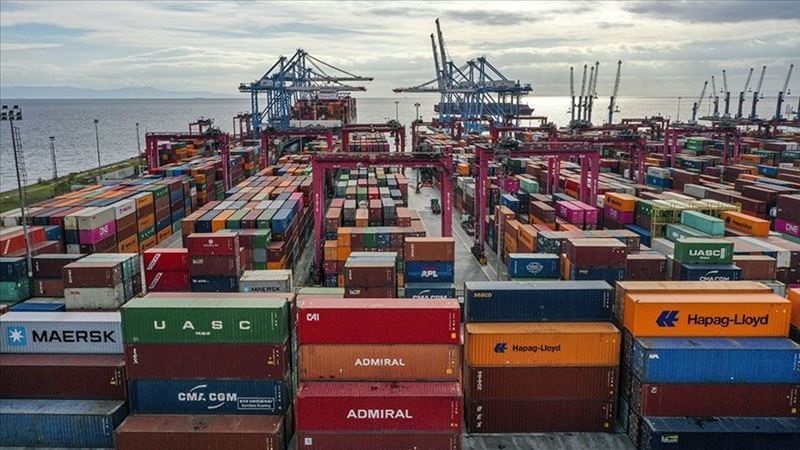
According to information compiled by an AA interviewer, the Ministry is carrying out comprehensive efforts to ensure that foreign trade becomes more competitive, faster, and more reliable, to increase high-technology and value-added exports, and to contribute to sustainable growth.
In order to strengthen export potential, the Ministry selects certain countries as “target markets” each year and supports companies exporting to these countries through special incentive mechanisms. When determining the target countries, factors such as global e-commerce shares, market entry conditions, geographical distances, and foreign trade strategy priorities are taken into consideration. In addition, the global political and economic environment is also taken into account.
Companies are being directed toward alternative markets
The main objective of these efforts is to reduce the impact of potential contractions in traditional markets on exports and to guide companies toward potential markets in different geographies. Within this scope, the Ministry identifies new markets by using macroeconomic indicators, the growth–share matrix, and market diversification analyses. Countries included under the Far Countries Strategy, members of the Organization of Islamic Cooperation, and countries reviewed within the framework of the Export Development Strategy play a significant role in these analyses.
Additional support is provided for expenditures made for target countries in line with the Decision on Export Supports. These supports cover a wide range of items, including e-export promotion, order fulfillment, sectoral trade and procurement delegations, and marketplace commission expenses.
Number of Target Countries Increased to 60 in 2026
Following the evaluations carried out by the Ministry, the number of target countries for this year has been determined as 60. Compared to last year, Palestine, Hungary, North Macedonia, Slovakia, and Syria have been added to the list. The countries included in the Ministry’s target market list are as follows:
“Germany, United States of America, Australia, Azerbaijan, Bahrain, Bangladesh, United Arab Emirates, United Kingdom, Bosnia and Herzegovina, Brazil, Algeria, Czechia, People’s Republic of China, Indonesia, Ethiopia, Morocco, Côte d’Ivoire, Philippines, Palestine, France, Ghana, Republic of South Africa, South Korea, India, Iraq, Spain, Italy, Japan, Cambodia, Canada, Qatar, Kenya, Colombia, Kuwait, Libya, Hungary, North Macedonia, Malaysia, Mexico, Egypt, Nigeria, Uzbekistan, Pakistan, Peru, Portugal, Romania, Russia, Senegal, Serbia, Slovakia, Syria, Saudi Arabia, Chile, Tanzania, Thailand, Tunisia, Oman, Jordan, Venezuela, and Vietnam.”
Last year, the number of target countries was 55. Thus, the number of target markets included in Türkiye’s export strategy has been increased to 60 for 2026.





Comments
No comment yet.