


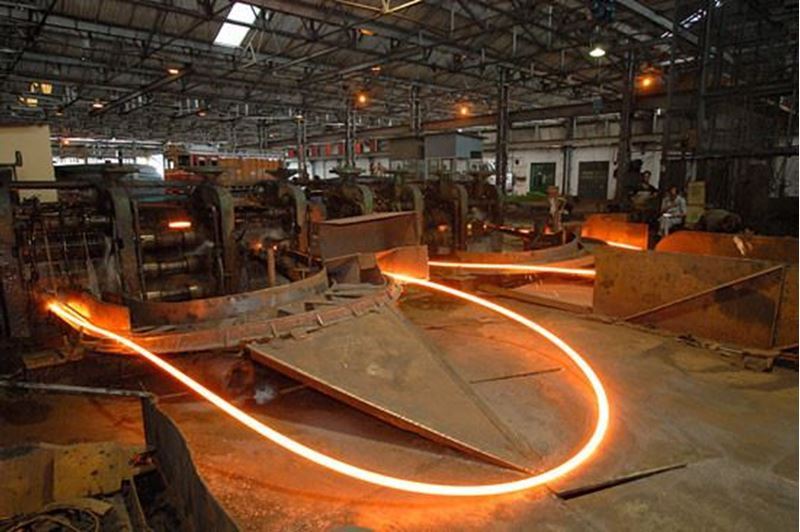
According to a letter obtained by Euronews, the Commission aims to revitalise European industry, which has been struggling amid intensifying global competition with China and the United States.
The call was made shortly before the EU executive is set to announce the Industrial Accelerator Act (IAA). The legislation is intended to accelerate the decarbonisation of energy-intensive sectors while at the same time preserving the competitiveness of production in Europe. With a similar regulation adopted in 2024, the EU had already prioritised domestic clean-technology manufacturing in line with its 2050 net-zero target.
In the letter, Stéphane Séjourné, Vice-President of the European Commission from France, warned that tariffs, subsidies, export restrictions and unfair competition are reviving power-based economic relations, cautioning that Europe’s industrial base and economic sovereignty could erode unless the EU develops an ambitious and pragmatic industrial policy.
Analysts say the IAA could strengthen the EU’s industrial competitiveness at a time when traditionally energy-intensive sectors such as cement and steel, as well as net-zero technologies, are facing weak demand and intense global competition. Critics, however, argue that the regulation could benefit countries with strong industrial bases such as France and Germany, potentially undermining competition within the EU single market.
The Commission’s letter stresses that when European public funds are used, they should contribute to production within Europe, underlining the objective of ensuring that the continent remains “an industrial power” rather than a “passive market.” Nine countries — including the Czech Republic, Estonia, Finland, Ireland, Latvia, Malta, Portugal, Sweden and Slovakia — warned the Commission in December that the proposed law could have negative effects on effective competition, prices and quality. Poland and the Netherlands have also called for a comprehensive impact assessment before the regulation is adopted.
An EU diplomat said political negotiations are ongoing regarding product criteria, incentives and permitting procedures, while financing has yet to be clarified. The Commission is reportedly considering the use of the EU’s multiannual budget and the Competitiveness Fund to support industry. While no exact figure has been announced for the share of European-origin products under the new law, proportions between 60% and 80% are being discussed. Products made by non-European companies producing within the EU could also be classified as “Made in Europe.”
The Commission also plans to create “lead markets” for products such as green steel and hydrogen to boost demand for sustainable, low-carbon industrial goods. In the area of state aid, there are discussions about easing notification requirements to the Commission for member-state funding of decarbonisation projects.
European industry representatives support the Commission’s initiative, pointing to the record €350 billion trade deficit with China recorded in 2025. Industry groups argue that an approach similar to China’s “Made in China” and the United States’ “Buy American” policies should be adopted in Europe as well, and they are calling for financial support mechanisms such as auctions, direct state aid and similar incentives to back the expected increase in production.



Comments
No comment yet.