Steel Network
13,407.44 TRY BIST 100 BIST 100
43.50 USD USD USD
6.29 CNY CNY CNY
51.58 EUR EUR EUR
0.12 CNY CNY/EUR CNY/EUR
34.13 TRY Interest Interest
69.26 USD Fossil Oil Fossil Oil
13,407.44 USD Copper Copper
168.08 USD Silver Silver
102.66 USD Iron Ore Iron Ore
351.00 USD Shipbreaking Scrap Shipbreaking Scrap
7,761.05 TRY Gold (gr) Gold (gr)
102.00 USD Iron Ore 61% Fe Iron Ore 61% Fe

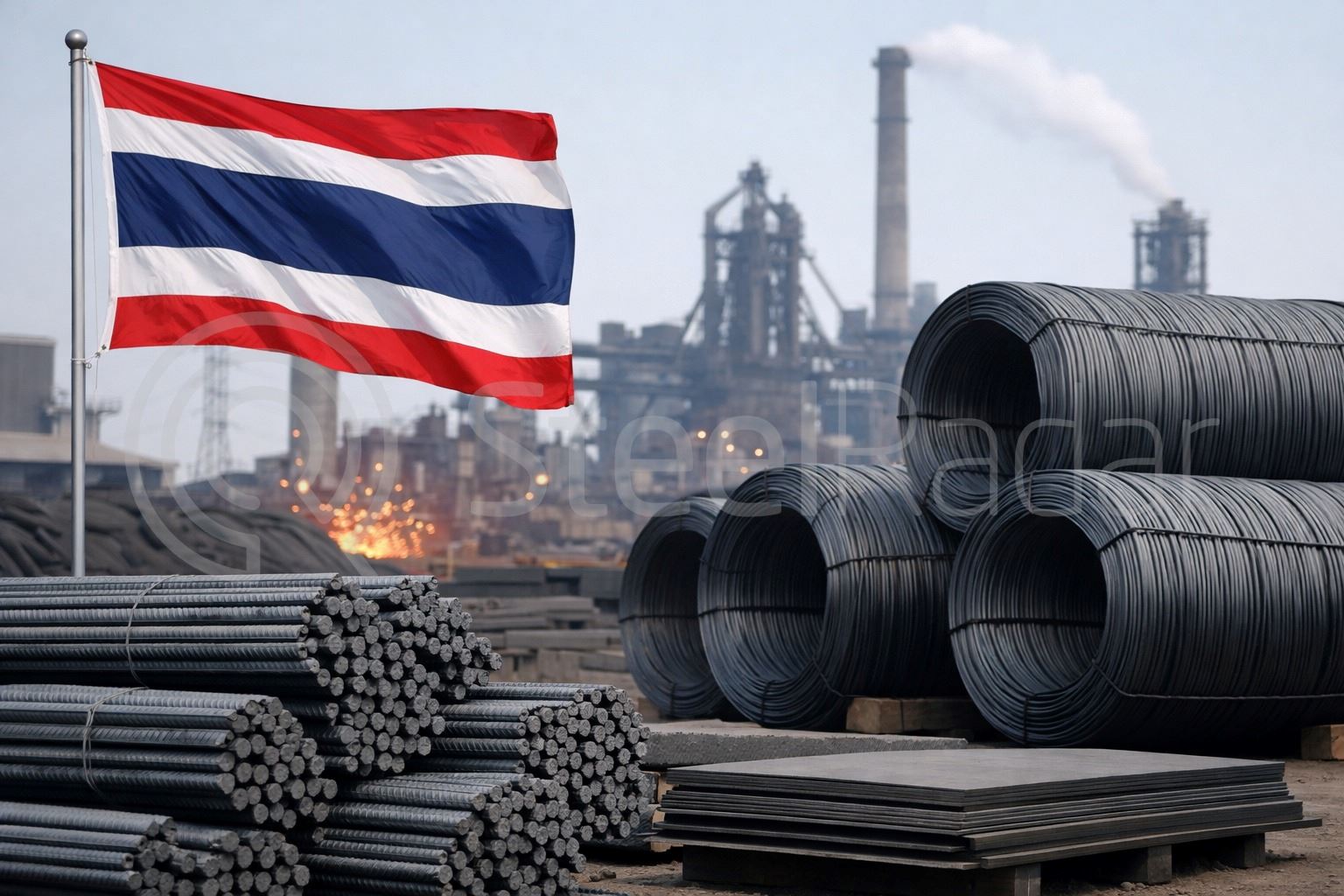
Thailand steel demand increased, imports and weak prices pressure the market

Thailand’s apparent steel consumption increased by 11.8% year on year in 2025, reaching 18.49 million tonnes. Over the same period, domestic steel production recorded a strong increase of 23.6% to 8.08 million tonnes.

Thailand steel demand increased, imports and weak prices pressure the market

However, market data indicate that growth momentum is expected to slow markedly in 2026 and beyond.

According to sector data, Thailand’s steel market remains heavily reliant on imports. As of 2025, around 55% of total steel supply was covered by imports, with China accounting for the largest share at 46%. Japan followed with a 31% share, while South Korea accounted for 13%.

As of the end of January 2026, steel prices in the domestic Thai market have been on a downward trend. Scrap prices recorded a month on month decrease of 1.8%, while rebar prices saw a sharper decrease of 3.7%, falling to 19,665 baht per tonne. Market participants stated that weakening demand and strong import pressure continue to weigh on prices.

Expectations for the 2026–2027 period point to a more moderate increase in consumption. Steel demand is forecast to increase by between 1% and 1.6%, averaging around 18.7 to 18.9 million tonnes annually. Disruptions in global supply chains, geopolitical uncertainties and a loss of momentum in the manufacturing sector are seen as the main factors limiting growth.

Several structural risks remain in focus for Thailand’s steel sector. High household debt levels are constraining domestic demand and weakening local purchasing power. At the same time, production increases in China and India, along with capacity expansions in ASEAN countries such as Vietnam and Indonesia, are intensifying regional competition. Low priced imports and ongoing dumping practices continue to pressure local producers. In addition, tightening global environmental regulations aimed at reducing carbon emissions, together with potential changes in international trade policies, are expected to accelerate structural transformation in Thailand’s steel industry in the coming period.

Comments

No comment yet.

Only +plus subscribers can access this content.

SUBSCRIBE now to share your thoughts on the markets and get more comments.
SUBSCRIBE If you already have an account Sign In

Most read news

India becomes a key competitive threat for Turkish exporters

Tuesday, February 3, 2026

Liberty Galați’s assets will be put up for sale in March for EUR 690 million

Tuesday, February 3, 2026

Shanxi Jingang signs digitalization agreement with Primetals Technologies for Arvedi ESP line

Tuesday, February 3, 2026

Aegean Exporters Associations' export amounted to USD 1 billion 447 million in January

Tuesday, February 3, 2026
Follow List
Expand
Your watch list is empty

Add your favorite commodities for quick access and don't miss the latest price change news.


There are no news categories you follow
Edit Notification Preferences
E-bulletin subscription
Sign up to receive the latest news and daily iron prices by e-mail and sms
Become a Plus Subscriber Now!
Try it free for 3 days!
Subscribe Now
Neutral Prices
Be informed
Provincial Iron Prices
Comments and Analysis
Subscribe Now