


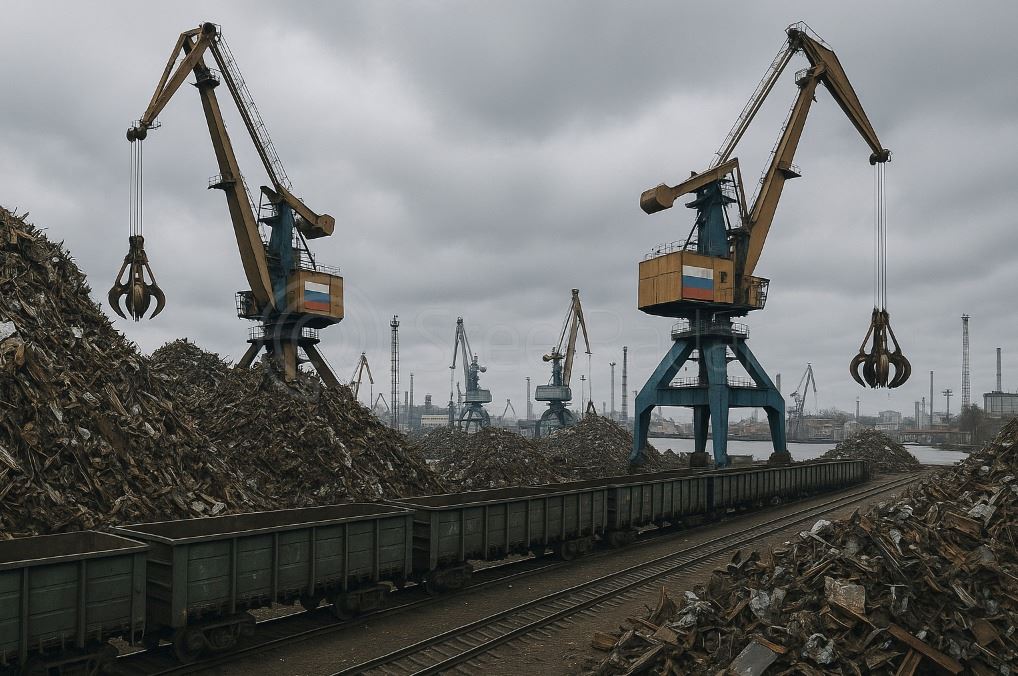
Despite the price increases, market sentiment remains weak. February deliveries reached only 0.6 million tonnes, far below the planned 0.97 million tonnes, with none of the consumers meeting procurement targets. Scrap collection remains limited, with shipments estimated at ~0.32 million tonnes by rail and a similar volume by truck.
Interestingly, NLMK returned to the market after a five-month absence, while other major steelmakers remain largely inactive. Industry inventories declined by 0.4 million tonnes in February, bringing total stocks to around 2 million tonnes, although a significant share of this material is held by producers that currently have limited scrap demand.
The Russian scrap market is now mainly supported by electric steelmakers, while several large integrated producers are expected to stay out of the market. There is also speculation that some mills could start selling scrap from their own inventories, which could pressure prices.
Looking ahead to March, steel mills have announced procurement plans of around 1.23 million tonnes, exceeding last year’s March plans. However, the market direction will largely depend on whether PromSort plants in the Ural region and Kaluga return to buying. If they do, prices could increase by RUB 2,000 or more. Otherwise, gains may be limited to RUB 1,000–1,500, or the market could even face temporary volatility.
Overall, the situation remains highly fragile, with tightening scrap supply on one side and weak finished steel demand and declining production on the other.






Comments
No comment yet.