


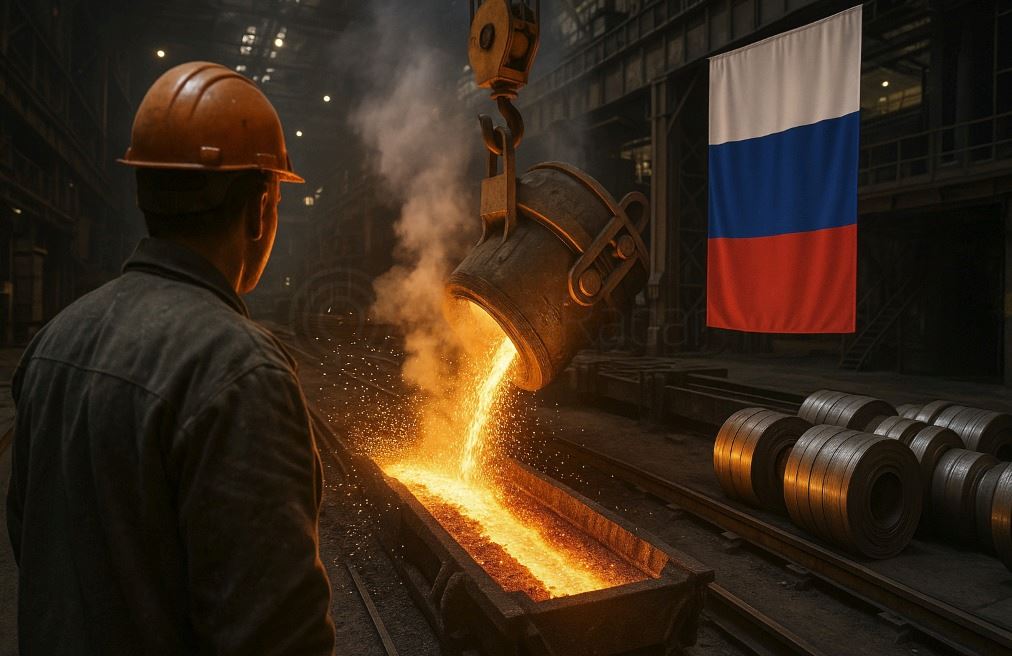
Speaking during a recent gathering organized by the Russian Union of Industrialists and Entrepreneurs, Rashnikov indicated that the industry has formally requested government intervention to shield locally produced rolled steel from lower-priced imports. He expressed confidence that the policy could be approved and implemented in the near term.
The initiative reflects growing concerns within Russia’s steel sector over uneven competition with foreign suppliers. Industry players have been advocating for protective mechanisms since late 2025, arguing that imported steel, especially from China, has been undercutting domestic prices and eroding margins.
Russia already maintains a fiscal mechanism targeting steel production. Since early 2022, local producers have been subject to an excise tax on liquid steel, calculated as a percentage of export prices for semi-finished products such as slabs. However, that levy includes a built-in adjustment: it is waived when slab prices fall below a defined threshold, allowing producers some flexibility during weaker market conditions.
The potential extension of excise duties to imported steel would mark a significant shift in policy, effectively broadening the scope of state intervention from domestic production to external trade flows. Officials at the Ministry of Industry and Trade have confirmed that the proposal is currently under review, signaling that regulatory groundwork is already underway.
If implemented, the measure could reshape pricing dynamics in the Russian steel market, potentially reducing import volumes while offering relief to local mills. However, it may also introduce new complexities for downstream consumers who rely on imported material for cost efficiency or specific product grades.
Market participants are now closely monitoring developments, as the timeline suggested by MMK points to a decision that could materialize before mid-year.



Comments
No comment yet.