


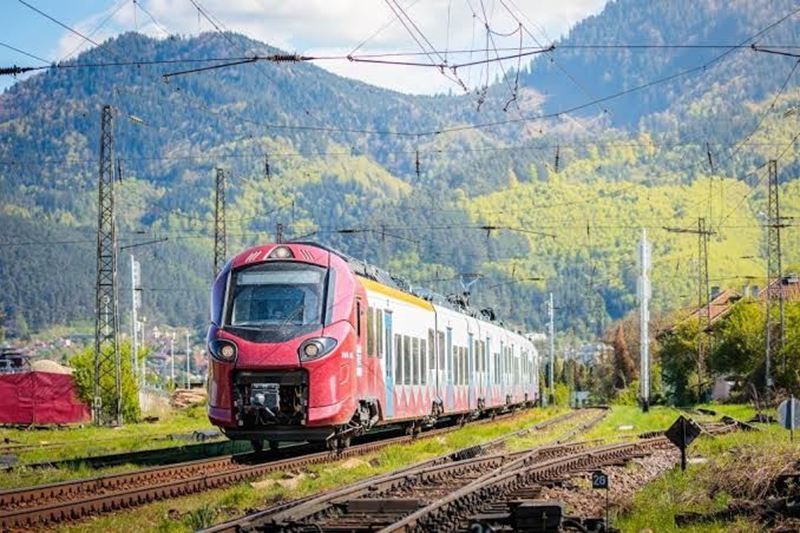
According to data released by the Romanian government, the country’s railway infrastructure has deteriorated significantly due to years of insufficient funding.
In 1990, railway lines overdue for renewal totaled 1,364 km, accounting for 10.10% of the network. By 2010, this figure had risen to 5,596 km, or 41.14%.
As of 2025, the length of railway lines that had exceeded their technical lifespan reached 9,753 km, representing 72.56% of the total network. The government noted that this figure has nearly doubled over the past 15 years.
Only 45.76% of funding needs were met in the previous period
The government stated that financial resources provided during the 2021–2025 period covered only 45.76% of the actual funding required for railway infrastructure. The funding gap for maintenance and repair of existing infrastructure alone exceeded RON 12 billion.
Insufficient funding has resulted in speed restrictions across the railway network and accelerated infrastructure deterioration. During the same period, rail passenger transport declined by more than 2%, while freight transport fell by around 23%. The previous plan had targeted 25% growth in the transport market.
Railway network renewal will be a priority
Under the 2026–2030 plan, accelerating the renewal of railway infrastructure accumulated from previous periods has been identified as a key priority.
Other main objectives include improving the competitiveness of rail transport in the domestic market and strengthening the integration of Romania’s railway network into the common European railway system.
The program covers various areas of the railway system, from basic maintenance and operational activities to infrastructure renewal and expansion, while also including administrative reforms aimed at improving the sector’s efficiency.
Investments could support steel demand
The implementation of the planned railway investments could support demand for steel products used in Romania’s railway and construction sectors. In particular, rail and other long steel product consumption could increase as railway lines are renewed, while structural steel and rebar demand may benefit from bridge, station and related infrastructure works.
Electrification and railway superstructure investments could also generate additional demand for various steel structures and fastening components. However, the Romanian government has not provided any estimate for the volume of steel to be used during the 2026–2030 period or the potential impact of the investments on the country’s overall steel consumption.





Comments
No comment yet.