


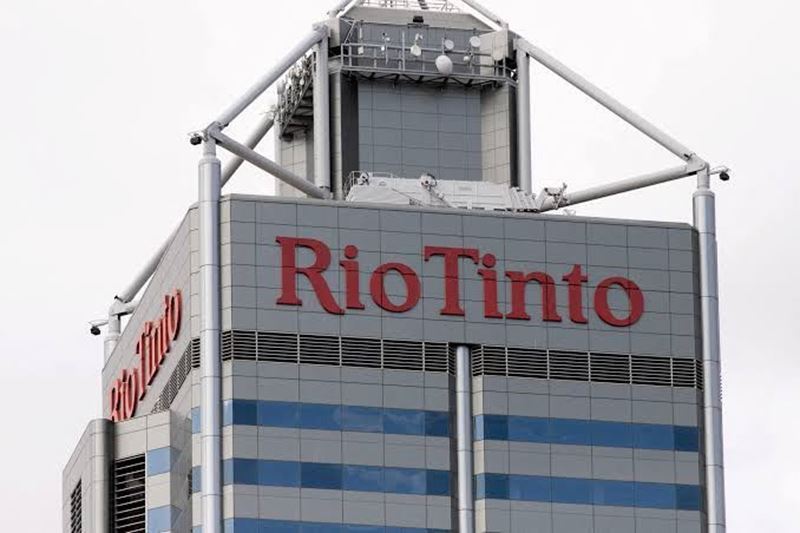
Rio Tinto CEO Simon Trott said the company has maintained its operational resilience despite ongoing geopolitical uncertainty, supported by its scale, geographic diversification, and robust supply chains.
Trott stated that, driven by the productivity improvement program implemented across its Pilbara operations, the company achieved its highest first-half iron ore production since the record set in 2018. He also noted that the Oyu Tolgoi copper mine continues to ramp up production in line with plan, with first-half output increasing by more than 30% year on year. Trott added that the Integrated Aluminium business continued to deliver strong operating performance, while more than three-quarters of the SimFer mine and port infrastructure at the Simandou project has now been completed. In addition, the railway system was fully commissioned during the first quarter.
Trott further said that Rio Tinto continues to advance its next-generation copper growth pipeline through the Resolution and Winu projects. In lithium, first production was achieved ahead of schedule at both the Sal de Vida and Fénix 1B projects. He emphasized that the company remains focused on further improving operational performance to deliver industry-leading shareholder returns and long-term growth.
Copper cost guidance revised downward
Rio Tinto said the ramp-up at the Oyu Tolgoi mine is progressing as planned, contributing to a 31% year-on-year increase in first-half copper production. Reflecting this performance, the company lowered its C1 net unit cost guidance for copper to 30-50 US cents/lb, compared with its previous guidance of 65-75 US cents/lb.
Consolidated copper production totaled 213,000 mt in the second quarter, down 7% both year on year and quarter on quarter. First-half production reached 442,000 mt, representing a 1% increase from the same period last year. Rio Tinto maintained its full-year 2026 copper production guidance of 800,000-870,000 mt.
Iron ore shipments increased
Rio Tinto's global iron ore production amounted to 87.1 million mt in the second quarter, down 1% year on year but up 5% from the first quarter. First-half production rose 5% year on year to 169.9 million mt.
Pilbara iron ore production totaled 83.5 million mt in the second quarter, remaining flat year on year while increasing 6% quarter on quarter. First-half output reached 162.3 million mt, up 6% compared to the same period in 2025.
Global iron ore shipments totaled 88.8 million mt in the second quarter, increasing 5% year on year and 17% quarter on quarter. First-half shipments reached 164.5 million mt, up 4% year on year.
Pilbara shipments amounted to 85.3 million mt during the quarter, rising 7% year on year and 18% quarter on quarter. First-half Pilbara shipments increased 5% year on year to 157.7 million mt.
Rio Tinto maintained its full-year 2026 shipment guidance at 343-366 million mt for global iron ore and 323-338 million mt for Pilbara shipments.
Aluminium supply chain remained resilient
The company said its aluminium business continued to demonstrate supply chain resilience, supported by a particularly strong recovery in bauxite production.
Second-quarter bauxite production totaled 15.2 million mt, down 3% year on year but up 14% from the previous quarter. First-half production declined 7% year on year to 28.5 million mt. Rio Tinto left its full-year bauxite production guidance unchanged at 58-61 million mt.
Alumina production increased 10% year on year to 2.0 million mt in the second quarter, although it declined 2% from the first quarter. First-half alumina output reached 4.0 million mt, up 8% year on year. The company's 2026 alumina production guidance remains unchanged at 7.6-8.0 million mt.
Aluminium production totaled 840,000 mt in the second quarter, remaining unchanged year on year while increasing 1% quarter on quarter. First-half output reached 1.68 million mt, broadly in line with the same period last year. Rio Tinto maintained its 2026 aluminium production guidance of 3.25-3.45 million mt.
Lithium production rose 20%
Rio Tinto produced 14,600 mt of lithium carbonate equivalent (LCE) during the second quarter. Output increased 20% year on year and 15% quarter on quarter, driven by the ramp-up of the Rincon starter plant and the earlier-than-planned commencement of production at the Sal de Vida and Fénix 1B projects.
First-half LCE production reached 27,300 mt, up 53% compared with the same period last year. The company maintained its full-year 2026 LCE production guidance at 61,000-64,000 mt.



Comments
No comment yet.