


Finished steel production rose 30.6% year-on-year to 706,949 tons. The increase was particularly notable in long products (construction steel); billet production rose 166.7%, while long products and structural steel profiles increased by 43.4%. Finished steel consumption also followed a strong trend, rising 18.6% to 1.576 million tons in October. Consumption of long products recorded rapid growth; billet increased by 52.3% and long products and structural steel profiles by 40.3%. Growth in flat products was more moderate, while a significant 20.9% rise in galvanized sheet consumption indicated momentum in the durable goods sector.
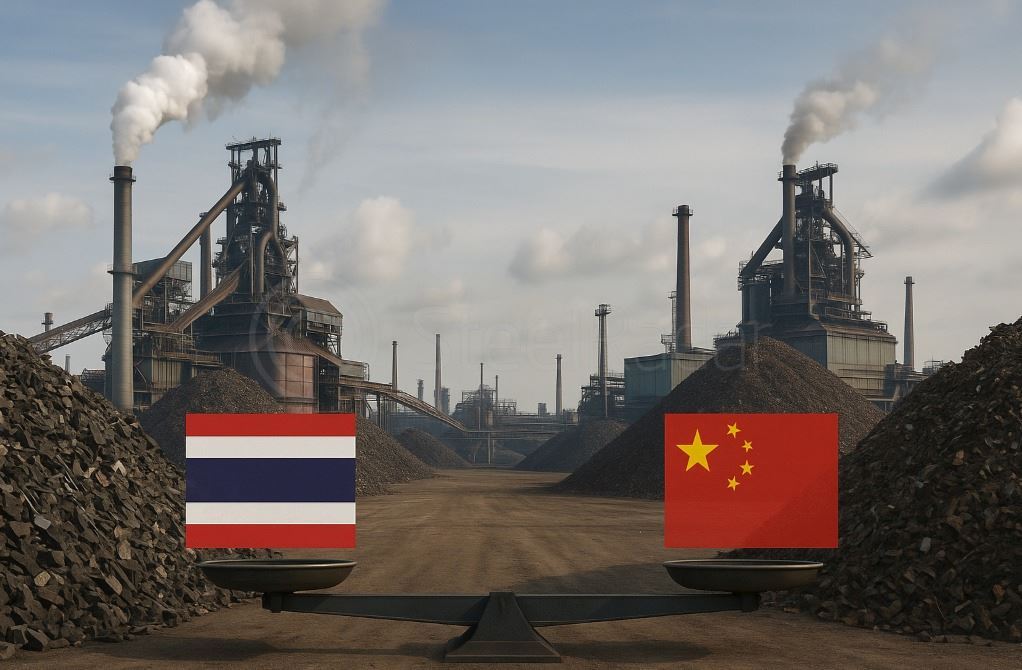
A key characteristic of the Thai steel market is its high dependence on imports. In October, imports rose 12% to 998,723 tons, covering approximately 63% of total consumption. The main suppliers were China (46%), Japan (31%), and South Korea (13%).
Weak domestic demand in China, particularly in the real estate sector, has rapidly redirected excess production capacity toward exports. Between January and September 2025, China increased semi-finished and finished steel exports by 17.5%, creating strong pressure in Asian markets. Despite strong domestic consumption, this cheap, high-volume Chinese steel flow has significantly limited the profit margins of local producers in Thailand. Local construction steel prices have started to decline, leaving domestic producers squeezed between rising costs and price competition. Although domestic construction demand in Thailand supports volume, prices and market balance are largely determined by China’s export strategy.







Comments
No comment yet.