


How would you assess the Czech steel market in 2026? What have been the key developments in terms of demand, prices and trade?
The Czech steel market in 2026 reflects the broader Central European picture. While real steel demand remains structurally weak, the trade environment has undergone a fundamental transformation. The construction sector has yet to show a convincing recovery, while the automotive industry, the backbone of industrial demand in the Czech Republic and Central Europe, is going through a major transformation. Production volumes remain under pressure, and investment decisions continue to be postponed throughout the supply chain. Meanwhile, activity in the machinery sector has remained broadly stable.
On the pricing side, the first half of the year was characterized by continued import pressure and weak margins across most long steel product segments. Domestic prices largely followed the downward trend seen across the EU, with buyers purchasing only to meet immediate needs and keeping inventories at minimum levels.
The most significant change, however, has come from the new trade framework. The EU's new steel trade measures, which entered into force on July 1, represent the most important structural change in the European steel market in the past decade. The first effects are already becoming visible, with the market shifting from a buyer's market driven by abundant import availability toward a more balanced environment.
For a country like the Czech Republic, where imports have long accounted for a significant share of the long steel products market, this represents a major shift. As the country's last integrated producer of long steel products, we see 2026 as a transitional year—challenging in terms of volumes, but one that could mark a turning point for the market structure.
"The rules governing melt-and-pour evidence must be practical and proportionate."
How have the EU's safeguard measures, import quotas and CBAM affected the Czech steel market? How would you evaluate their impact on producers, traders and end-users?
First, we need to be honest about the starting point. The previous safeguard measures had gradually lost much of their effectiveness. While import quotas were expanded through annual liberalization, European demand continued to contract. As a result, by 2025 the system no longer provided meaningful protection against the consequences of global overcapacity, which the OECD projects will exceed 700 million tonnes by 2027.
By contrast, the new regulation, which significantly reduces quota volumes, introduces a 50% out-of-quota duty and, most importantly, requires compliance with the melt-and-pour origin rule from October onward, has the potential to restore a genuinely level playing field. It will also substantially close the loopholes related to origin circumvention and indirect trade routes that had weakened the previous system.
CBAM represents the second pillar of this transformation. As a producer investing in decarbonization, it is essential that the carbon costs we bear under the EU Emissions Trading System (EU ETS) are also reflected at the border. Otherwise, we would simply be exporting emissions while importing unemployment.
At the same time, we need to remain realistic. CBAM currently covers mainly upstream products, creating an incentive for imports to shift toward downstream products. For this reason, we believe that extending CBAM to steel-intensive downstream products is both a logical and necessary next step. This position is also supported by the European Parliament's ENVI Committee.
From the perspective of traders and end-users, we recognize that this transition is not without challenges. Quota management, origin documentation and CBAM reporting requirements create additional administrative burdens, particularly for SMEs. Therefore, the implementing rules that the European Commission is expected to finalize by the end of August, especially the rules governing melt-and-pour evidence, must be practical and proportionate. Trade defense measures should prevent unfair trade, but they should not disrupt legitimate commerce.
"Uncertainty will not disappear completely"
What are your expectations for the second half of 2026? How do you see demand, prices and trade evolving in the Czech and Central European steel markets? Do you expect uncertainty to continue, or do you foresee a recovery?
We expect the second half of 2026 to bring gradual stabilization rather than a sharp recovery. From a pricing perspective, we believe the new quota framework will provide a stronger floor for the market. As buyers return after the summer holiday period, inventories across the supply chain remain exceptionally low, and access to alternative import sources has become structurally more difficult, we expect upward price momentum from September onward. The fact that third-quarter quotas were heavily oversubscribed just days after the new system entered into force also illustrates how quickly trade flows are beginning to adjust.
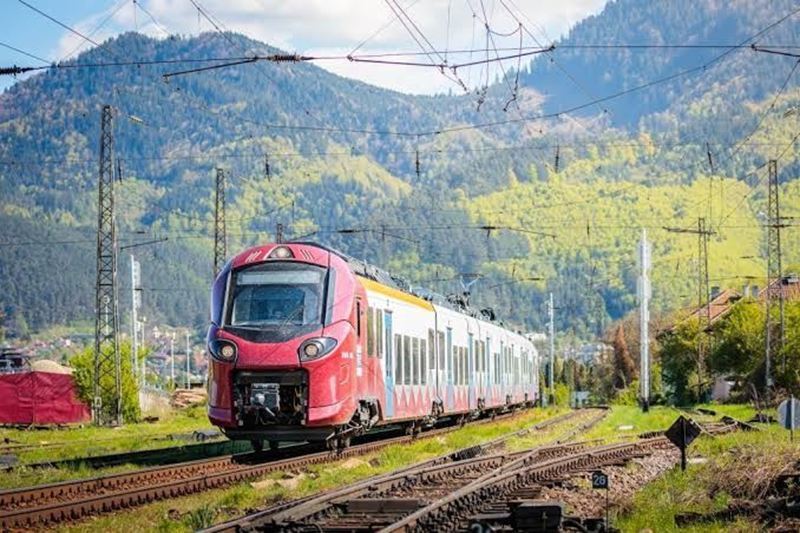
The key question, however, is how real demand will evolve. A sustainable recovery in Central Europe will depend largely on the performance of the German economy, the pace of the automotive transition, and whether announced infrastructure and defense spending translates into actual orders. We remain cautiously optimistic over the next 12–24 months. Nevertheless, we expect the second half of 2026 to remain relatively subdued overall. Rail infrastructure, energy networks and defense-related projects present significant opportunities for both our group and Central European producers.
Uncertainty, however, will not disappear completely. High energy costs remain a structural disadvantage for European industry. A more balanced approach is needed to reconcile the future trajectory of the EU Emissions Trading System (EU ETS) with the economic realities of steel production. Meanwhile, US trade policy continues to reshape global trade flows, while Chinese overcapacity has not disappeared; it is simply seeking new markets and increasingly taking the form of exports of processed finished products. Therefore, our outlook remains cautious but constructive. We believe the market is moving onto a firmer footing and that the underlying fundamentals are gradually improving. However, recovery should not be taken for granted—it will need to develop over time.
"Türkiye's decarbonization drive creates new opportunities for cooperation"
How would you evaluate Moravia Steel's current business relations with Turkish companies? Do you see opportunities to expand cooperation or increase trade with Türkiye in the coming period?
Our group is primarily focused on the European steel market, so our direct business relations with Türkiye remain limited at present. However, the EU's new trade measures are changing the dynamics of Türkiye-EU steel trade, and we recognize that Turkish exporters are already feeling their impact.
In our view, a predictable, rules-based trading environment offers a far more sustainable framework than cyclical volume-driven trade that often leads to commercial disputes. Within this framework, we see opportunities for cooperation over time, particularly in specialized products where our portfolios complement rather than compete with each other. In addition, Türkiye's decarbonization process, accelerated by CBAM, is creating new opportunities for collaboration. A Turkish steel industry investing in low-emission production can become not only a supplier to Europe, but also a long-term strategic partner. For this reason, we believe that relations with Türkiye are more likely to strengthen than weaken in the coming years.




Comments
No comment yet.