


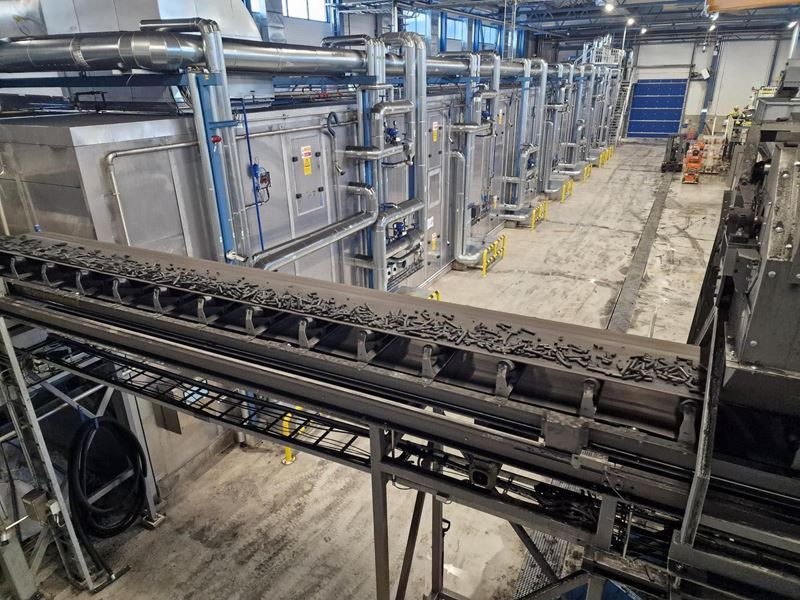
The investment, worth approximately EUR 30 million, will enable fossil coke used in ferrochrome production to be replaced with biomass-based biocoke.
At the new facility, biochar is processed into biocoke that can be used as a substitute for fossil coke in ferrochrome production. According to Outokumpu, once operating at full capacity, the facility has the potential to reduce annual carbon dioxide emissions by up to 82,000 tonnes. The company said this is equivalent to the annual emissions of around 8,000 Finnish citizens.
The investment is part of Outokumpu’s strategy to strengthen its sustainability efforts in stainless steel and ferrochrome production and advance its climate targets. The company aims to reduce carbon dioxide emissions across its value chain by 42% by 2030 compared with the 2016 baseline. Biocoke is considered one of the key tools for reducing direct emissions intensity.
Juha Erkkilä, Head of Outokumpu EvoCarbon, said the investment represents a concrete step in the company’s efforts to reduce the climate impact of its operations. Erkkilä noted that biocoke production has now started in Tornio, with the material being produced both for Outokumpu’s own use and for external customers.
Outokumpu’s integrated stainless steel production facility in Tornio is considered one of the most efficient stainless steel production complexes in the world. The new agglomeration facility supports the company’s efforts to further improve its stainless steel and ferrochrome operations. Outokumpu also reported that the carbon footprint of its ferrochrome is 67% lower than the industry average.




Comments
No comment yet.