


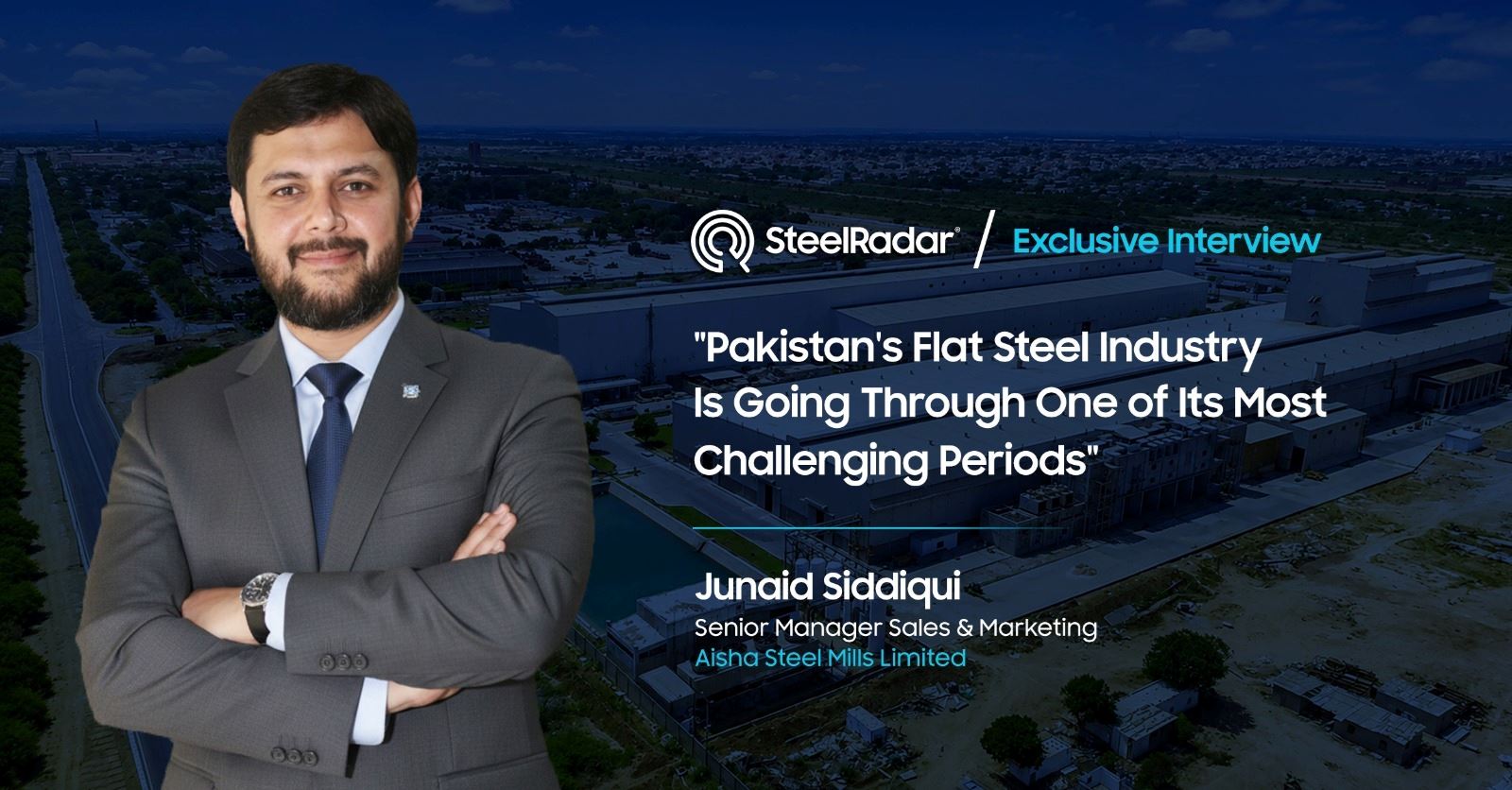
How are the recent exchange rate fluctuations, difficulties in accessing finance, and uncertainties surrounding import procedures affecting flat steel producers in Pakistan? How do you assess the impact of these developments on raw material procurement and production planning?
Pakistan's flat steel industry has been navigating one of its most challenging operating environments in recent years. The Pakistani Rupee has experienced significant depreciation against the US Dollar over the past two years, substantially increasing the cost of imported raw materials such as Hot Rolled Coil (HRC) and zinc, the two primary inputs for flat steel production. Exchange rate volatility has made procurement planning more complex, increased working capital requirements, and rendered forward pricing and long-term contract commitments considerably more challenging. Since Pakistan's flat steel industry relies heavily on imported raw materials, even relatively small currency fluctuations can have a significant impact on production costs, pricing strategies, and overall business planning.
At the same time, elevated interest rates and tighter liquidity have significantly constrained access to financing, reducing the ability of both producers and customers to maintain comfortable inventory levels. Consequently, companies are adopting more disciplined procurement strategies, focusing on inventory optimization, prudent cash flow management, and demand driven purchasing rather than maintaining large stock positions.
Import related uncertainties including constraints in opening Letters of Credit (LCs), shipment delays, and evolving regulatory clearance procedures have further complicated raw material procurement and disrupted production planning. These factors require manufacturers to carefully balance raw material availability with fluctuating market demand while minimizing inventory and supply chain risks.
Despite these headwinds, Pakistan's flat steel producers have demonstrated considerable resilience by strengthening supply chain discipline, improving demand forecasting, enhancing operational efficiency, and working more closely with suppliers to ensure continuity of raw material availability. Looking ahead, greater macroeconomic stability, a more rational interest rate environment, and a predictable import policy framework will be critical to strengthening investment confidence, enhancing industrial competitiveness, and unlocking the full growth potential of Pakistan's flat steel industry.
In my view, the industry's long-term success will depend not only on market demand but also on policy consistency, financial stability, and the ability of manufacturers to remain agile in an increasingly volatile global business environment.
"Antidumping duties alone cannot ensure sustainable competitiveness"
How do you evaluate the competition between domestic producers and imported products in Pakistan's flat steel market? In particular, have the anti-dumping measures met expectations in terms of supporting the local industry?
Competition between domestic producers and imported flat steel in Pakistan remains intense and structurally significant. Imported material continues to exert considerable pricing pressure on local manufacturers, particularly during periods when global steel prices soften and Chinese export volumes increase, making imported products more competitive in the Pakistani market. This dynamic compels domestic producers to continuously optimize their cost structures while maintaining high standards of product quality, operational efficiency, and customer service.
The implementation of anti-dumping measures has provided meaningful support to the domestic industry by creating a more level playing field and discouraging the influx of unfairly priced imports. These measures have contributed to improved capacity utilization among local producers and have strengthened investor confidence in the long-term viability of Pakistan's flat steel manufacturing sector. However, anti-dumping duties alone cannot ensure sustainable competitiveness; they provide a protective framework, not a competitive advantage.
Long-term growth will depend on continuous investment in technology modernization, product diversification, quality consistency, and customer-centric commercial models that create sustainable value. In today's market, customers evaluate suppliers not only on price but also on product consistency, technical reliability, availability, service responsiveness, and after-sales support. These factors increasingly influence long-term purchasing decisions and customer loyalty.
In my view, the most effective path forward is a combination of fair and consistently enforced trade policies on one hand and a relentless focus on industrial modernization, operational excellence, innovation, and value-added product development on the other. Protection creates an opportunity; productivity, innovation, and customer value ultimately determine who succeeds in the marketplace.
Despite the slowdown in the construction sector, which industries do you expect to drive flat steel demand in Pakistan over the next few years?
While the construction sector has experienced a notable slowdown, Pakistan's flat steel demand is supported by an increasingly diversified industrial base, spanning automotive, engineering, home appliances, renewable energy, and general manufacturing. This diversification provides a degree of resilience by reducing the industry's dependence on any single end-use sector and helping sustain demand through varying economic cycles.
Among these, the energy sector, particularly solar-related applications, stands out as the most immediate and visible growth driver. The rapid expansion of distributed solar installations across Pakistan has generated sustained demand for galvanized steel products used in mounting structures and related applications. Given the country's growing focus on energy affordability and energy security, this segment is expected to remain an important contributor to flat steel consumption in the coming years.
The engineering and broader manufacturing sectors are likely to remain the principal structural demand drivers as macroeconomic conditions gradually stabilize. Even a moderate recovery in industrial activity tends to generate broad-based steel consumption across multiple product categories. Likewise, the home appliance industry, although currently constrained by softer consumer spending, offers significant long-term potential as economic confidence improves and household purchasing power gradually recovers.
The automotive sector currently represents a relatively smaller share of flat steel consumption compared with more mature regional markets. Nevertheless, continued localization, increased component manufacturing, and gradual expansion of domestic vehicle production could provide additional demand support over the medium term.
Overall, I remain cautiously optimistic about the outlook for Pakistan's flat steel market. Future demand growth is likely to be broad-based, supported by industrial recovery, continued expansion of renewable energy, gradual improvement in consumer driven industries, and a more stable macroeconomic environment. In my view, the industry's long-term growth will increasingly depend on the strength and diversity of its downstream manufacturing base rather than on any single demand segment.
How do you assess the impact of China's evolving steel export policies and the China–Pakistan Economic Corridor (CPEC) on Pakistan's flat steel industry?
China's evolving steel export policies have far-reaching implications for global steel trade, and Pakistan is not insulated from these developments. Periods of elevated Chinese exports typically place downward pressure on international steel prices, making imported material more competitive and intensifying pricing pressure on domestic producers. Conversely, any moderation in Chinese exports whether driven by domestic policy adjustments, capacity rationalization, or global trade measures create opportunities for local manufacturers to strengthen their market position, improve capacity utilization, and enhance profitability. These changing market dynamics reinforce the need for Pakistani producers to continuously improve efficiency, strengthen competitiveness, and expand into higher value products. The China–Pakistan Economic Corridor (CPEC) represents a long-term strategic opportunity that extends beyond infrastructure development. As industrial zones mature and manufacturing activity gradually expands, CPEC has the potential to generate additional downstream demand for flat steel products across industrial fabrication, construction materials, engineering, and energy-related applications. This would create a stronger domestic demand base that local manufacturers are well positioned to serve, provided they continue to deliver consistent quality, reliable supply, and competitive commercial solutions. Pakistan's strategic geographic location also offers long-term potential to strengthen its role within the regional steel value chain. With supportive trade policies, improved logistics infrastructure, and continued industrial development, domestic producers could gradually expand their presence in regional markets, particularly in Central Asia and the Middle East, where industrialization and infrastructure development continue to create demand for competitively priced flat steel products. Ultimately, realizing these opportunities will require sustained investment in technology modernization, product diversification, operational excellence, and trade facilitation. In my view, long-term success will depend not only on favorable external developments but also on the industry's ability to continuously enhance its competitiveness, create greater value for customers, and integrate more effectively into regional and global supply chains.
"CPEC represents a long-term strategic opportunity that extends beyond infrastructure investment"
What strategic steps should Pakistan's flat steel industry prioritize to strengthen its international competitiveness over the coming years?
Enhancing the international competitiveness of Pakistan's flat steel industry requires a deliberate, long-term, and multi-dimensional strategy. In my view, four priorities will be fundamental to achieving sustainable growth and strengthening the industry's position in regional and global markets.
First, technology modernization must be regarded as a strategic imperative rather than an optional investment. Continuous adoption of advanced manufacturing technologies, including automation, digitalization, energy efficient production processes, and precision manufacturing is essential to improve productivity, enhance product consistency, reduce production costs, and narrow the competitiveness gap with leading regional producers.
Second, the industry must accelerate its transition toward higher value-added products. Commodity-grade flat steel will inevitably face intense price competition from low-cost exporting countries. The greater opportunity lies in expanding the production of specialized products such as high-strength steels, coated and pre-painted products, precision-slit coils, and application-specific grades for the automotive, construction, engineering, home appliance, and renewable energy sectors. A stronger value-added portfolio not only improves profitability but also builds deeper customer relationships based on technical capability, product performance, and service excellence rather than price alone.
Third, trade policy should evolve from reactive protection to a long-term competitiveness strategy. Pakistan requires a stable, transparent, and predictable policy framework that protects domestic manufacturers from unfair trade practices while simultaneously facilitating access to competitively priced raw materials, encouraging exports, and providing investors with the confidence needed for long-term industrial planning. Policy consistency is one of the strongest foundations for sustained industrial investment.
Finally, the broader business environment must become more conducive to industrial growth. Competitive long-term financing, reliable and affordable energy, modern logistics infrastructure, efficient port operations, and a streamlined regulatory framework are all essential to attracting the scale of investment required for meaningful industrial transformation and export competitiveness.
Pakistan already possesses many of the fundamental strengths needed to build a globally competitive flat steel industry, including an established manufacturing base, a strategic geographic location, and a large domestic market. With sustained investment, policy consistency, technological advancement, and an unwavering commitment to innovation, quality, and customer value, I believe Pakistan's flat steel industry has the potential to evolve from serving primarily domestic demand into becoming a competitive and respected participant in regional and international steel markets.



Comments
No comment yet.