


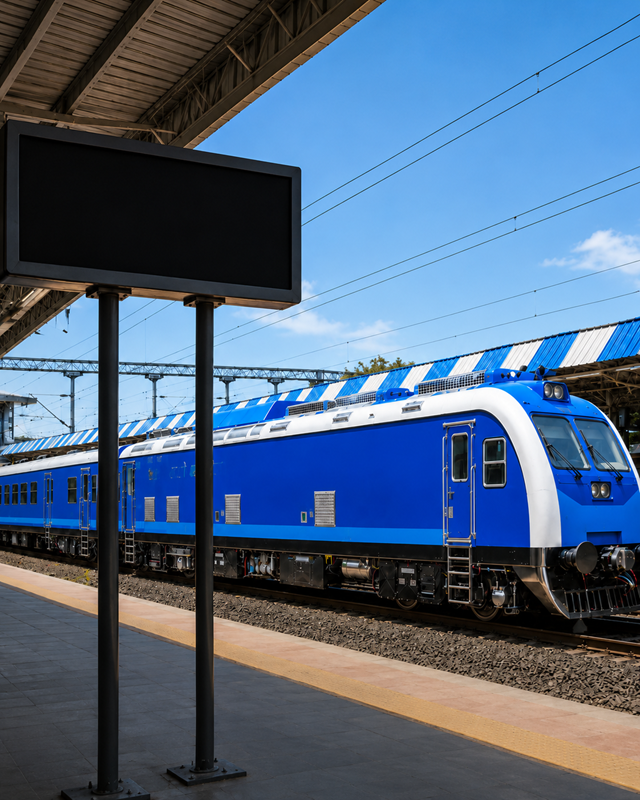
The company's contribution is considered an important milestone in India's transition toward sustainable and low-carbon transportation infrastructure.
X5CrNi1810 grade austenitic stainless steel, produced at Jindal Stainless' Jajpur and Hisar facilities, was used in the construction of the hydrogen-powered train. The project is one of Indian Railways' key initiatives aimed at expanding environmentally friendly transportation solutions through hydrogen fuel technology.
Stainless steel gains importance in next-generation railway vehicles
The company emphasized that stainless steel is increasingly preferred for modern railway vehicles due to its high corrosion resistance, crashworthiness, high strength-to-weight ratio, fire and impact resistance, long service life, and recyclability.
Its lightweight properties also improve energy efficiency, making it particularly well suited for next-generation transportation systems such as hydrogen-powered trains.
"Proud to contribute to the future of clean mobility"
Abhyuday Jindal, Managing Director of Jindal Stainless, expressed pride in contributing to the hydrogen-powered train project, stating:
"The future of transportation will be shaped not only by cleaner energy sources but also by advanced materials that make these technologies more efficient, durable, and sustainable. We are proud to contribute to India's first hydrogen-powered train. This project marks an important milestone in the country's clean mobility transition and the Atmanirbhar Bharat vision."
Jindal added that stainless steel has proven its value in railway applications through its strength, corrosion resistance, safety, and life-cycle performance, and that the company will continue to provide innovative and sustainable material solutions for India's next-generation transportation infrastructure.
Supplying Indian Railways for more than 30 years
Jindal Stainless has been supplying stainless steel to Indian Railways for more than three decades. During this period, the company has provided materials for the first LHB passenger coaches, the Vande Bharat Sleeper, India's first Vande Metro train, stainless steel coach bodies, and the country's first corrosion-resistant stainless steel salt containers.
The company noted that its growing involvement in advanced railway projects further strengthens stainless steel's position as the preferred material for safe, durable, and sustainable transportation infrastructure.
Hydrogen-powered trains to play a key role in decarbonization
According to Jindal Stainless, hydrogen-powered trains can play a significant role in decarbonizing global rail transport by offering zero tailpipe emissions, lower operating noise, and high energy efficiency.
The use of lightweight, corrosion-resistant stainless steel also enhances operational performance while reducing life-cycle costs.
The company concluded that stainless steel will continue to play an increasingly important role in next-generation transportation projects, ranging from high-speed rail and metro systems to hydrogen-powered trains, contributing to the development of safer, longer-lasting, and more environmentally sustainable transport infrastructure.



Comments
No comment yet.