


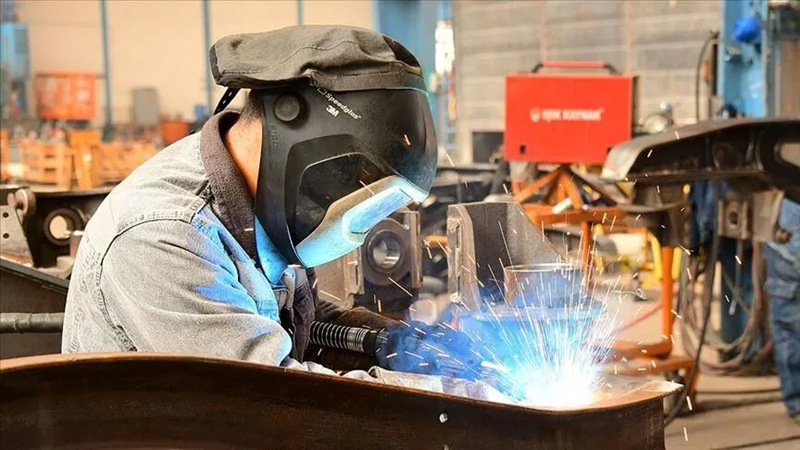
The August results of the İSO Türkiye Manufacturing PMI, which is monitored as one of the leading indicators of economic activity, were released. The headline PMI, which stood at 47.7 in July, rose to 48.1 in August.
While the PMI remaining below 50 indicates that operating conditions in the sector deteriorated, the increase in the index showed that the contraction was more moderate compared to the previous month.
Decline in New Orders Eased
The war in the Middle East and the resulting increase in uncertainty continued to negatively affect demand conditions in the manufacturing sector in August. While total new orders and new export orders continued to decline, the decreases in both indicators were more limited compared to July.
Due to the continued weakness in demand, manufacturers’ output declined for the third consecutive month. The decline in output remained moderate in August, while weakness in workloads led to more pronounced cuts in employment and purchasing activity.
Companies mainly preferred to use their existing inventories to meet orders. This resulted in declines in both input inventories and finished goods inventories.
Input Costs Reached Their Highest Level in Three Months
In addition to increases in fuel and oil prices, rising raw material costs caused input cost inflation in the manufacturing sector to reach its highest level in the last three months.
In parallel with the increase in costs, companies also raised their final product prices. Although inflation in selling prices accelerated in August, it remained below the average level recorded in the first six months of the year.
Meanwhile, the impact of the war in the Middle East on supply chains continued. Disruptions resulted in longer supplier delivery times.
“The War Is Creating Uncertainty in Decision-Making Processes”
S&P Global Market Intelligence Economics Director Andrew Harker, in his assessment of the İSO Türkiye Manufacturing PMI data, stated that the impact of the war in the Middle East on Türkiye’s manufacturing sector continued.
Harker said that the war not only weakened demand but also created additional uncertainty over companies’ business decisions.
However, Harker noted that the slowdown in the decline in new orders in August, reaching the most moderate level of the last three months, was a positive development, and stated that companies had been able to limit the effects of the war to some extent.
Harker emphasized that this development offered some hope that the sector could regain momentum in the coming months, but stressed that the outlook would largely depend on the course of developments in the Middle East.




Comments
No comment yet.