


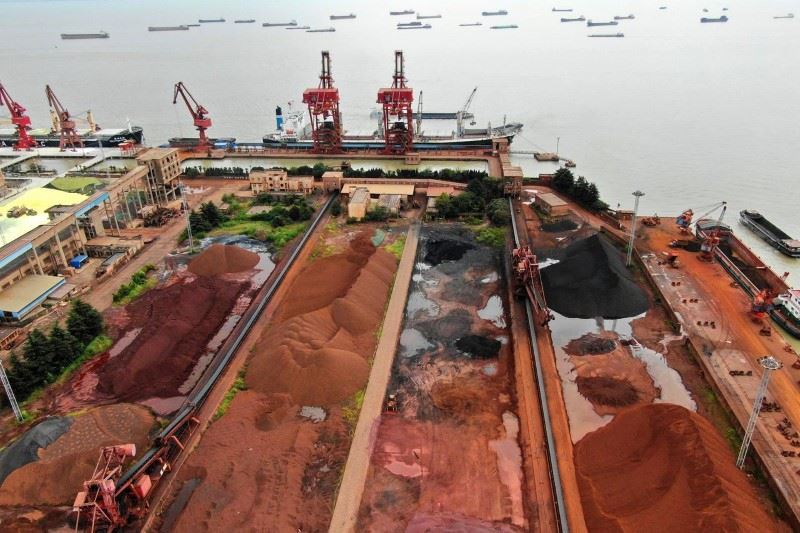
With soaring imports and iron ore prices, a 25% increase in top consumer China in just three weeks was taken by many as confident steel demand is strong. China buys about 70% of the iron ore transported by sea. As such, it is overwhelmingly the main driver of demand.
According to Chinese customs data on December 7, November iron ore imports are reported to be 104.96 million metric tons. The situation marks a 14.6% increase from October and the strongest month since July 2020.
All of this sounds very positive, and no doubt marginally retracing China is expected to support prices on the Dalian exchange that remain above $100 per metric ton (close to several-week highs).
The market has also received support from the Chinese politburo, which has pledged to promote the "healthy development" of the real estate sector. This comes shortly after China's central bank announced a cut in banks' reserve requirement ratio to support slowing economic growth.
The central bank has cut rates for the second time this year, freeing up RMB 1.2 trillion ($188 billion) in long-term liquidity to support lending, this time considering the heavily indebted real estate sector led by Evergrande. In Reuters' opinion, the market is betting that construction will revive after the winter slows down.
However, there are a few issues to be aware of!
Much of this increase in iron ore imports is driven by port stocks. The current level is the highest since 2012 for this time of year. Meanwhile, steel prices are falling as both rebar and HRC SHFE fall.
Other iron-based prices are also falling. Stainless steel prices fell to a five-month low amid rising inventories and weak demand.
Steel consumption and the road ahead of China
Another issue is steel mill consumption. China's State Council has committed the country to the highest emissions by 2030, promising a 65% reduction in emissions per unit of GDP (not as many hoped China would become the world's largest source of emissions, but still not without consequences for heavy pollutants, steel as). If Beijing is serious about achieving this target, the restrictions seen in the steel sector this year are likely to continue to a large extent.
Beijing's pledge to promote the "healthy development" of the real estate sector should also not be seen as an explicit mandate to promote unrestricted construction, as it was in the past. Likewise, it could mean that it would not allow speculative and largely uncontrolled construction, but would rigidly limit private companies' access to funds given too much entry into the industry.
The jury is still out on whether to let the heavily indebted construction firms survive. A few examples can be given even if the largest is allowed to continue. As Beijing continues its efforts to return the economy to a more sustainable consumption pattern, construction is unlikely to be as tough as it has been in the past decade.
Therefore, further increases in iron ore prices due to higher import volumes are far from a sure bet, although short-term trends point to an upward trend.



Comments
No comment yet.