


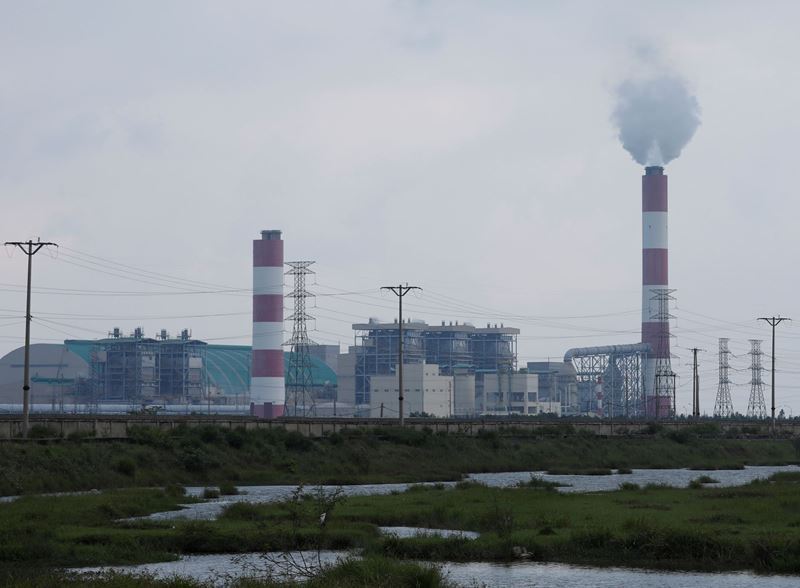
At the meeting chaired by Deputy Prime Minister Tran Hong Ha, it was emphasized that emission quota allocation would be implemented for the first time in Vietnam, and it was stated that the pilot process should be informative and conducted within a framework of clear legal rules.
Steel plants at the center of the pilot program
Under the pilot program proposal prepared by the Ministry of Agriculture and Environment, 25 iron and steel production plants were included in the pilot program from among the facilities required to prepare a greenhouse gas inventory. These plants, together with 34 thermal power plants and 51 cement production plants, form a pilot group of 110 facilities.
It is planned that the total emission allowances allocated to iron and steel plants will be set at 3.8% to 4.4% below the total emissions projected for the 2025-2026 period. It was reported that the allocation of allowances will be shaped taking into account the sector's production capacity, technological infrastructure, and growth targets.
Production and recovery balance in quota calculations
Deputy Minister of Agriculture and Environment Le Cong Thanh stated that the 2022-2024 period was significantly affected by the COVID-19 pandemic and post-pandemic conditions, causing production data at iron and steel plants to fall below normal levels. He pointed out that strictly applying the data for this period could limit the plants' production growth and recovery.
Therefore, the Ministry, together with industry associations, companies, and relevant public institutions, developed a coefficient based on three factors to be used in quota adjustments. This coefficient was created based on growth targets, emission reduction targets, and the technological capacity of the plants.
Measurement, verification, and technology differences on the agenda
Deputy Minister of Industry and Trade Nguyen Sinh Nhat Tan stated that differences in technology, equipment, and raw materials between facilities, particularly in the iron and steel sector, should be taken into account in quota allocation. Tan emphasized that establishing independent measurement and verification mechanisms is critical for the reliability of emissions data.
Industry representatives stated that an approach based on emission intensity per unit of product, rather than an absolute upper limit, in emission quota allocation would encourage technological investments in iron and steel facilities. They also called for flexible internal quota regulations and the early implementation of a transparent carbon credit market.
Transition to national implementation in 2028
Dinh Quoc Thai, Secretary General of the Vietnam Steel Association, stated that completing measurement and verification tools compatible with international standards is a priority before the system is implemented nationwide.
Officials announced that the focus will be on pilot programs until 2027, and that from 2028 onwards, emissions quota management will be mandatory at the national level in all sectors, including the iron and steel sector. The Ministry of Agriculture and Environment will be responsible for ensuring that the process is conducted in a scientific, transparent, and fair manner.


Comments
No comment yet.