


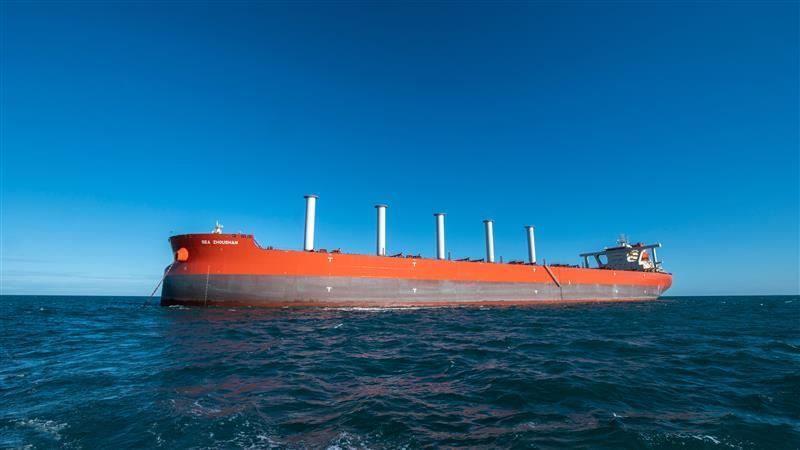
Under the agreement, the vessels—scheduled for delivery from 2029 onward—will be used in global iron ore transportation, with ethanol set to be deployed as the primary fuel on an ocean-going vessel for the first time in the maritime industry. The initiative is expected to have the potential to reduce greenhouse gas emissions from shipping by up to 90% compared to the use of heavy fuel oil.
The agreement reportedly includes 25-year contracts for the construction of two vessels, with options for additional ships. The vessels will be 340 meters long, have a carrying capacity of 325,000 tonnes, and will be based on the second-generation Guaibamax design.
The new ships are being designed with a multi-fuel system compatible not only with ethanol, but also with methanol and heavy fuel oil, and will feature infrastructure enabling future conversion to alternative fuels such as LNG and ammonia. The design will also incorporate energy-efficiency technologies including five rotor sails, more efficient engines, hydrodynamic improvements, shaft generators, frequency inverters, and silicone paint to reduce fuel consumption.
According to the company, ethanol could deliver approximately 90% lower carbon emissions than heavy fuel oil when assessed on a full “well-to-wake” lifecycle basis. Vale also stated that testing of ethanol use in its logistics operations includes trucks and locomotives on the Vitória-Minas Railway (EFVM).
The next-generation vessels are expected to reduce greenhouse gas emissions by approximately 15% compared to the current Guaibamax fleet, while the company noted that its previously introduced Valemax and Guaibamax vessels can generate up to 41% lower emissions than standard capesize vessels.
Developed in line with the targets of the International Maritime Organization (IMO), the project aims to contribute to the decarbonization of maritime transport.
Vale S.A. stated that it has invested approximately $1.4 billion since 2020 to reduce Scope 1, 2, and 3 emissions, and has committed to cutting Scope 3 emissions from its supply chain by 15% by 2035.




Comments
No comment yet.