


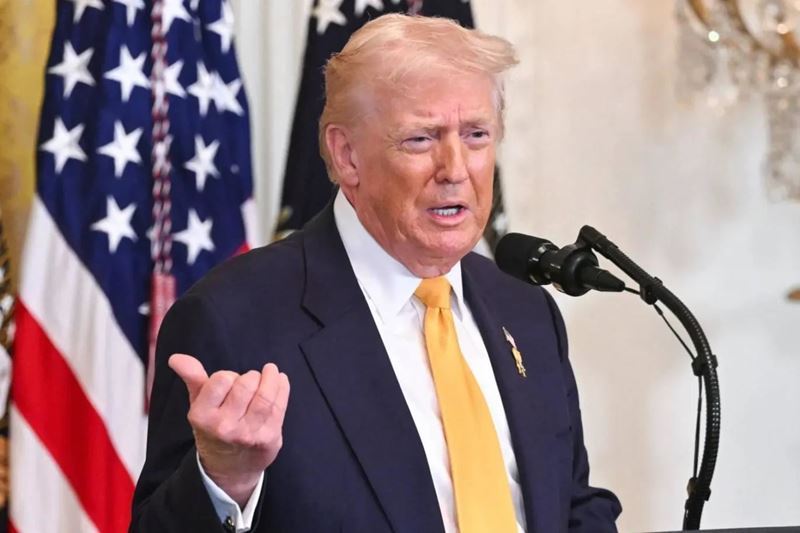
Trump announced on his Truth Social account, "I am deeply honored to have just signed the global 10% tariff on all countries." He indicated that the tariffs would take effect almost immediately, and the decision he signed would be implemented starting February 24.
A statement from the White House noted that the regulation was enacted under Section 122 of the 1974 Trade Act. The statement emphasized that this section grants the president the authority to address certain fundamental international payment issues through additional tariffs and other specific import restrictions. As part of this framework, a temporary import tax of 10% would be imposed on goods imported to the U.S. for 150 days.
Some products would be exempt from the tariff. Critical minerals, energy products, certain agricultural goods, pharmaceuticals, specific electronics and automotive products, aerospace products, and informational materials were excluded from the temporary import tax. Additionally, products under Section 232, goods from Canada and Mexico compliant with the U.S.-Mexico-Canada Agreement (USMCA), and certain textile products from specific Central American countries were also excluded.
The White House also mentioned that Trump had directed the U.S. Trade Representative to launch investigations under Section 301 regarding unfair and discriminatory trade practices.
Meanwhile, the U.S. Supreme Court had previously ruled that the regulations enacted by Trump, based on the International Emergency Economic Powers Act (IEEPA), did not grant the president direct authority to impose taxes. In response to the ruling, Trump argued that the U.S. had long been subjected to unfair trade practices and expressed that actions would continue under different legal authorities.




Comments
No comment yet.