


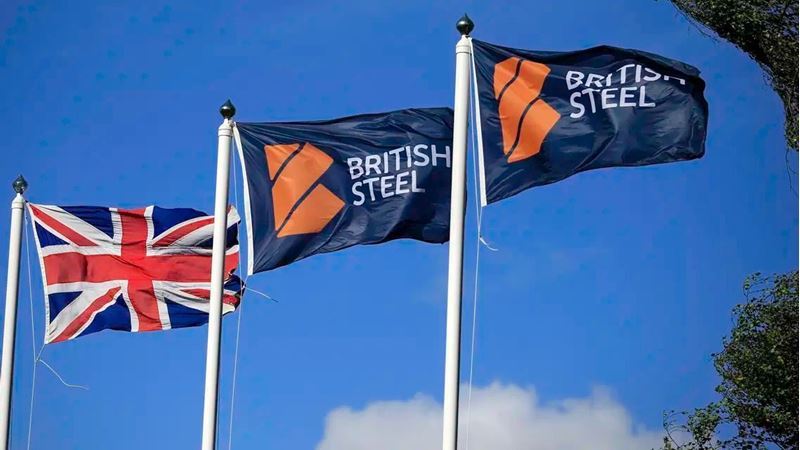
The company, which employs around 3,500 people at its Scunthorpe plant, was taken under government control in April last year amid concerns over Jingye’s plans to shut down the facility. However, ownership of the company still remains with Jingye. British Steel continues to operate the UK’s last two blast furnaces, playing a critical role in the country’s primary steel production capacity.
According to sources familiar with the matter, the UK government is taking steps to classify the steel sector as a strategically important area for national security. This approach is seen as a development that could pave the way for the company’s full nationalization.
Meanwhile, it is reported that Chinese investors offered around GBP 100 million for British Steel earlier this month, but the offer was rejected. Jingye is said to have initially sought a valuation exceeding GBP 1 billion. The government is also considering giving Jingye a limited timeframe to reach an agreement.
If the plant were to close, the UK’s primary steel production capacity would effectively come to an end. Blast furnaces enable steel production from raw materials without reliance on scrap. However, according to National Audit Office data, the company’s operating costs had reached GBP 377 million by the end of January, and if the current trend continues, this figure could exceed GBP 1.5 billion by 2028.
These developments are seen as the latest efforts to turn British Steel into a sustainable business. The company was acquired by Greybull Capital in 2016, but went bankrupt three years later and was subsequently taken over by Jingye.
Although the UK steel sector has significantly shrunk compared to its peak in the 1970s, British Steel remains a major employer in Scunthorpe and provides indirect employment to tens of thousands of people across the wider steel supply chain. Network Rail, which manages the country’s railway infrastructure, sources around 95% of its rail requirements from this facility.
Jingye’s Scunthorpe plant is reported to be losing approximately GBP 700,000 per day, and the company announced plans to shut down the facility in March 2025. During this period, authorities attempted to increase production in order to improve profitability. Any potential new investor would likely need to invest hundreds of millions of pounds to replace fossil fuel-based, high-emission blast furnaces with electric arc furnaces.
Earlier in March, the government announced that it would double tariffs on imported steel and tighten import quotas in order to protect the sector from oversupply caused by low-cost Chinese imports.
A government spokesperson stated that protecting steel production in the UK remains a priority, adding: “We continue to engage with the company’s owner to find a solution that safeguards jobs, production, and national interests.”




Comments
No comment yet.