


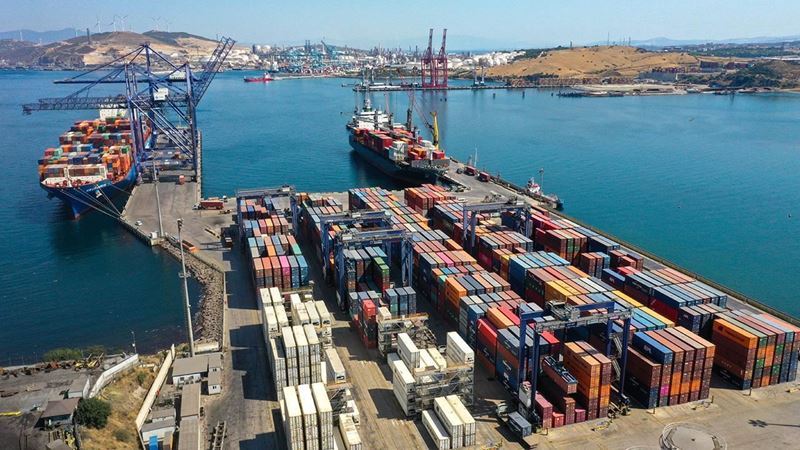
According to the report, although Türkiye’s total exports to the European Union continue to increase overall, a product-based analysis reveals a significant loss of market share to China.
In the past year, Türkiye’s exports to the EU rose by $9.7 billion. However, $5.7 billion of this increase came from the automotive sector alone, meaning that 59% of the total growth was driven solely by automotive exports. When automobiles, machinery-equipment, and electrical equipment are evaluated together, 72% of the total increase originated from these top three product groups. This indicates that export growth has been concentrated in a limited number of sectors.
The report notes that Türkiye lost market share to China in 44 out of the 97 product groups it exports to the EU. These 44 groups account for more than 35% of Türkiye’s total exports to the EU. Despite overall export growth, the narrowing of product diversification and weakening competitiveness in certain categories stand out.
One of the areas where market losses have been most evident is textiles. In knitted apparel, non-knitted apparel, and other textile articles, both export volume and EU market share declined. As of the third quarter of 2025, total exports of these three product groups to the EU stood at approximately $13 billion. However, despite a temporary post-pandemic recovery trend, losses in some categories have accelerated.
By contrast, a more positive outlook emerged in high-technology-intensive sectors. In railway vehicles, aircraft and spacecraft, and arms and ammunition product groups, an upward trend was observed in the EU market. In particular, in the defense industry, Türkiye’s share of EU arms and ammunition imports exceeded 4%, with growth showing a stable pattern. Nevertheless, uncertainty remains as to whether the decline seen in railway and aerospace vehicles over the last two quarters will prove temporary or permanent.
Meanwhile, the automotive sector Türkiye’s locomotive industry in the EU market continues its strong performance. The upward trend that gained momentum after the pandemic became even more pronounced over the past year. Notably, Türkiye recorded gains in EU passenger car sales during a period when China was losing market share.
The report prepared by Türkiye Sınai Kalkınma Bankası highlights that the EU’s protectionist measures against China have created opportunities for the Turkish automotive sector. This advantage is attributed to long-standing supply chain integration and structural ties established under the Customs Union framework. However, the scope and implementation of the proposed “Made in Europe” regulation remain unclear. How this regulation ultimately takes shape will be decisive for the sustainability of Türkiye’s current gains.



Comments
No comment yet.