


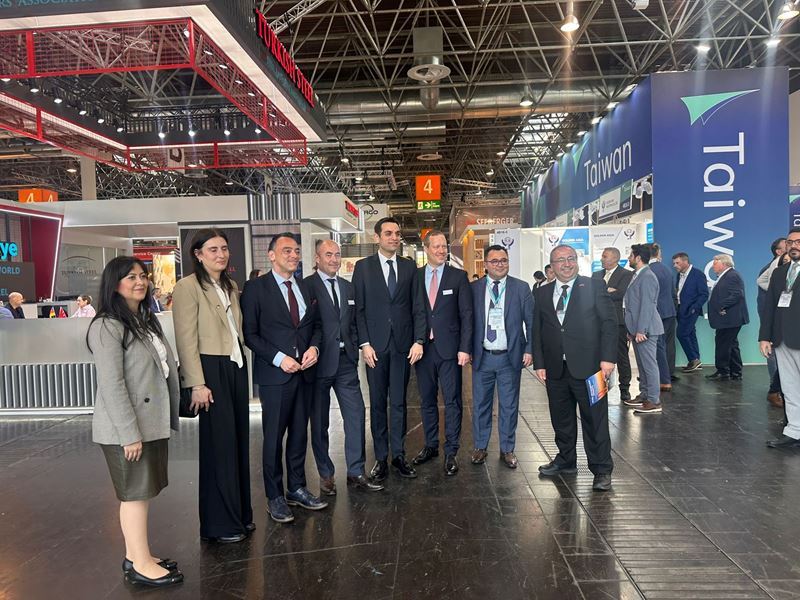
Speaking at the fair, Selçuk Yılmaz, Member of the Supervisory Board of the Turkish Steel Exporters’ Association, stated that Türkiye ranks seventh globally and first in Europe in steel production. Yılmaz noted that 2025 was completed with approximately 38 million tons of liquid steel production, while exports reached 19 million tons, maintaining Türkiye’s strong position in the global market.
On the other hand, drawing attention to the challenges posed by increasing protectionist measures, Yılmaz emphasized that the European Union market remains critically important. He stated that long-standing quotas and additional tariffs have been putting pressure on exports, noting that a 25% duty is applied when quotas are exceeded and that further tightening of quotas by the European Commission is on the agenda. He also added that Türkiye’s trade ties within the Customs Union framework provide an important advantage in this process.
Addressing the impact of global developments on costs, Yılmaz highlighted that freight rates increased by 30–40% following tensions between Iran and the United States. He reminded that Türkiye sources key inputs such as scrap and iron ore largely via seaborne trade, and noted that since a significant portion of exports is also carried out by sea, this increase directly affects the sector.
Yılmaz also pointed out that rising energy costs are putting pressure on production, stating that increases in electricity and natural gas prices used in industry as of April 4 have driven costs higher. In this context, he emphasized that the sector continues to seek solutions, with green transformation and renewable energy investments gaining importance. Referring to Türkiye’s 2050 net zero carbon target, Yılmaz stated that the shift toward alternative energy sources, particularly solar energy, has been accelerating, adding that currently around 15–20% of the sector’s energy needs are met from renewable sources and this share is expected to increase in the coming period.
Despite a potential contraction in the European market, Yılmaz stated that the sector has the capability to shift towards alternative markets. He noted that new business opportunities are being explored through trade delegations organized to different regions under the coordination of the Turkish Steel Exporters’ Association. While Europe remains the main market for Turkish steel, he added that possible restrictions could affect capacity utilization rates, but the sector’s flexible structure would allow it to find new markets.



Comments
No comment yet.