


Uraloğlu shared his assessment of the 2025 data prepared by the Directorate General of Maritime Affairs in a written statement.
Emphasizing that efforts are ongoing to increase Türkiye’s share in maritime trade and to further develop maritime transport as a cornerstone of foreign trade, Uraloğlu underlined that cargo activity at Turkish ports reached a historic level in 2025. He stated that the volume of cargo shipped from Turkish ports to foreign ports increased by 0.4% year-on-year to 142,784,002 tonnes, while cargo arriving at Turkish ports from abroad increased by 5.6% to 271,632,303 tonnes.
Uraloğlu noted that international maritime cargo transportation increased by 3.8% compared to the previous year, reaching 414,416,305 tonnes in 2025. In terms of regional port authorities, Aliağa recorded the highest cargo handling volume with 89,507,150 tonnes, followed by Kocaeli with 83,939,975 tonnes and İskenderun with 70,905,737 tonnes.
He added that in 2025, transit cargo transported by sea amounted to 69,157,356 tonnes, while cabotage cargo reached 69,678,982 tonnes.
Highlighting strong growth in liquid and dry bulk cargo, Uraloğlu said that liquid bulk cargo topped all categories with 169,714,709 tonnes handled. Liquid bulk cargo increased by 4.6%, while dry bulk cargo increased by 5.7% to 160,938,575 tonnes. Containerized cargo rose by 0.7% to 144,339,527 tonnes, general cargo increased by 6% to 65,847,587 tonnes, and Ro-Ro cargo grew by 4.7% to 12,425,500 tonnes.
According to Uraloğlu, the cargo types showing the largest increases in port handling were coal with 4.35 million tonnes, crude oil with 3.15 million tonnes, and liquefied natural gas (LNG) with 3.08 million tonnes, pointing to rising volumes in energy- and industry-related cargoes.
Uraloğlu stated that among overseas destinations in 2025, Italy ranked first with 17,276,832 tonnes, followed by the United States with 13,518,965 tonnes and Egypt with 10,869,420 tonnes. The leading countries of origin for cargo arriving in Türkiye were Russia with 101,562,166 tonnes, followed by the United States with 21,729,680 tonnes and Egypt with 14,354,073 tonnes.
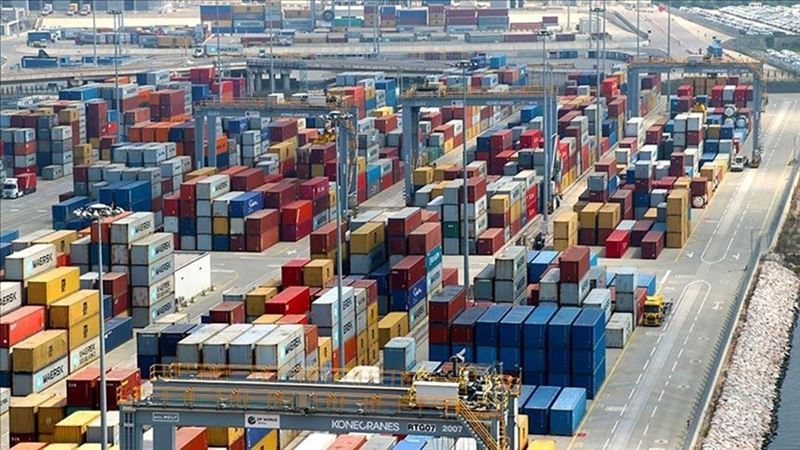
He also reported that container throughput increased by 3.5% year-on-year to 14 million TEU. Ambarlı ranked first in container handling with 3,428,048 TEU, followed by Kocaeli with 2,505,678 TEU and Tekirdağ with 2,138,327 TEU.
Concluding his remarks, Uraloğlu said that the maritime sector is expected to set new records in 2026, adding that Türkiye aims to secure a larger share of global maritime trade through strategies focused on seafarer employment while maintaining the highest safety standards.






Comments
No comment yet.