


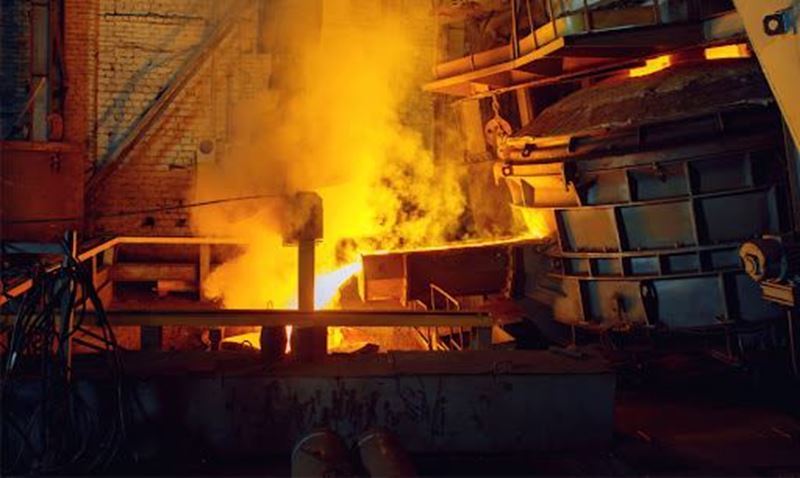
The Turkish Steel Producers Association (TÇÜD) announced Türkiye’s steel production, consumption, and foreign trade data for October 2025. Accordingly, Türkiye’s raw steel production increased by 3.1% in October compared to the same month of last year, reaching 3.2 million tons. The country ranked as the world’s 8th largest raw steel producer, falling behind Iran, which increased its production by 12%.
In the first ten months of 2025, Türkiye’s raw steel production increased by 1.2% to 31.3 million tons, maintaining its position as Europe's largest steel producer and ranking 7th in the world.
Final product production and consumption
In October, flat steel production decreased by 7.8% to 1.3 million tons, while consumption decreased by 5.1% to 1.5 million tons. In long products, production declined by 1.7% to 2.4 million tons, and consumption dropped by 8.9% to 1.8 million tons. During the ten month period, flat product production decreased by 1.8% and consumption by 0.1%, whereas long product production increased by 6.4% and consumption by 5.3%.
Final product production decreased by 4% in October to 3.6 million tons, while consumption decreased by 7.2% to 3.3 million tons. Over the ten month period, final product production increased by 3.1% to 35.5 million tons, and consumption increased by 2.6% to 32.2 million tons.
Increase in steel product exports
In the month in question, Türkiye’s steel product exports increased by 18.7% in volume. Over the ten month period, exports increased by 12.6%. Türkiye’s steel product imports, on the other hand, decreased by 10.8% in volume in the same month, with a 29.2% decline in semi finished products, a 14.1% decrease in flat products, and a 9.1% increase in long products. In the first ten months of the year, total imports increased by 13.8%.
Despite the increase in raw steel production in the first ten months of 2025, 7.3% decline was observed in scrap imports due to the rise in semi finished product imports. The largest share of scrap imports came from the EU, with a 0.8% decrease. Scrap imports from CIS countries increased by 51.1%, while imports from the United Kingdom increased by 3%.
The export to import coverage ratio remained at 77.76% over the ten month period. The share of imports in total steel product consumption was 47.3% for flat products it was 67.6%, in imports under the IPR 59.6%, for semi finished products 77.4%, for flat products 46.5%, and for long products 39.7%.
Commenting in the statement, TSPA Secretary General Veysel Yayan said that:“Under conditions where the Turkish steel sector can utilize only 62.7% of its 60 million ton capacity, it has become crucial to continue taking measures that, as in the US and EU, will direct consumption towards domestic supply. Ensuring a balance in foreign trade should be established as a fundamental goal to control the high rates of increase in imports going forward.”




Comments
No comment yet.