


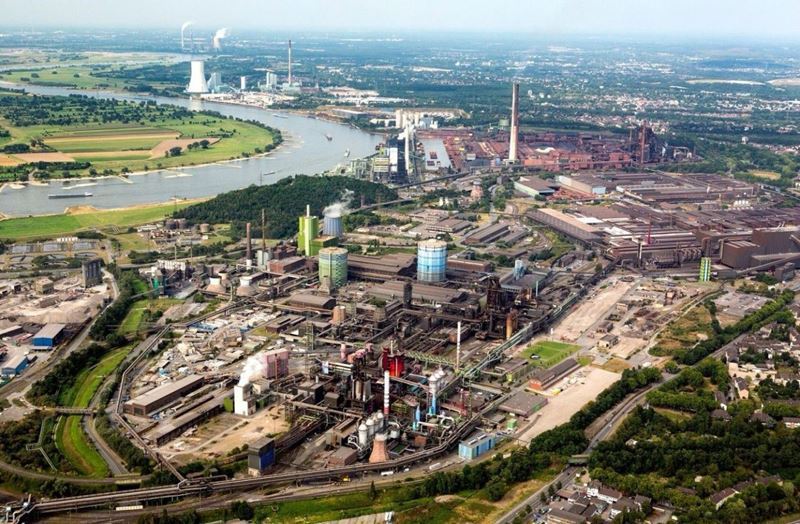
In a statement, the company emphasized that thyssenkrupp has made significant progress in restructuring its steel segment. In particular, the collective restructuring agreement reached with IG Metall and the shareholder agreement regarding the future of the plant in southern Duisburg were highlighted as key elements of this process.
It was also noted that the regulatory framework in Europe has changed considerably, becoming more favorable. The European Union has positioned steel production as a strategic sector and increased protective measures against global overcapacity and dumping effects. Key steps include tightening import quotas, doubling tariffs in case of quota overruns, implementing the Carbon Border Adjustment Mechanism, and establishing the EU Steel Action Plan. Despite rising energy costs due to the war in Ukraine, the long-term outlook for the sector has become more stable.
thyssenkrupp AG CEO Miguel López, in his assessment of the future of steel operations, stated that conditions for profitable growth are now stronger than in the past, following a principled agreement within the company, with trade unions, and with policymakers in Europe. López said that Jindal has been a constructive partner throughout the process, but both sides have agreed to pause the talks for now.
Narendra Misra thanked the cooperation carried out during the negotiations, stating that despite the suspension of the agreement, relations between the parties continue and the goal of low-carbon steel production in Europe remains intact.
The company emphasized that its goal of making thyssenkrupp Steel Europe an independent entity remains unchanged. Accordingly, the restructuring process will continue within the company. It was stated that the industrial strategy defined in recent months and the agreements reached with trade unions provide a strong foundation for overcoming structural challenges.
Additionally, the agreement reached with Salzgitter AG in February regarding the future of the HKM plant was noted to offer new perspectives for the facility in southern Duisburg. It was also stated that policymakers are increasing their actions toward the sector, particularly regarding unfair competition and global overcapacity.
thyssenkrupp AG plans to separate its business segments or open them to third-party investments as part of its ACES 2030 strategy. In this context, the company aims to transform into a financial holding structure. In the medium term, the goal is for thyssenkrupp Steel Europe to become an independent entity, with the company maintaining a minority stake.




Comments
No comment yet.