


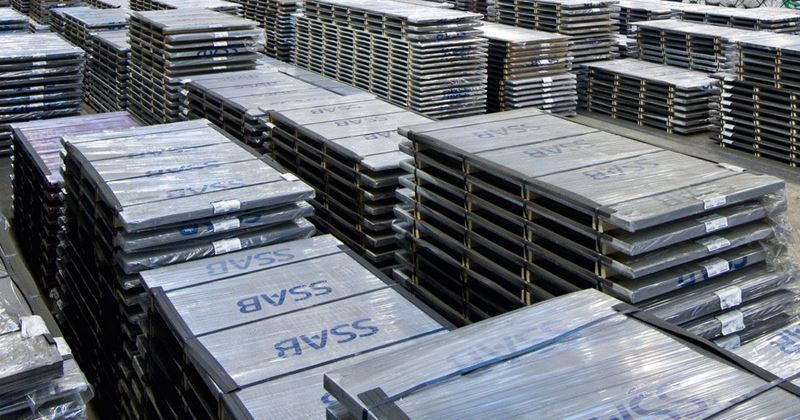
Earnings per share were recorded at 0.44 SEK, while the net cash position stood at 11.6 billion SEK. The Board of Directors has proposed a dividend of 2.00 SEK per share for the 2025 financial year.
According to the company’s statement, the operating result for the fourth quarter increased by 269 million SEK compared to the same period last year. This improvement was primarily driven by better performance in SSAB Americas operations. However, the quarter also incurred costs of 1,020 million SEK due to planned maintenance work. Operating cash flow for the quarter remained stable at 4.1 billion SEK, matching last year’s level. For the full year 2025, the operating result was 6,116 million SEK, with weak market conditions negatively impacting annual performance.
SSAB’s strategy to increase its share of premium products supported profitability during the challenging steel market conditions in 2025. The company highlighted that SSAB Special Steels’ premium products and global distribution network contributed to price stability, while European operations maintained relatively strong shipments of high-strength steel to the automotive sector. SSAB’s strong position in the US heavy plate market also positively impacted financial results throughout the year.
Due to weakness in the European market, SSAB implemented various cost-control measures in 2025, including short-term work, time banks, and restrictive cost policies. The company reported that, thanks to its premium product strategy and local production in the US, the direct effects of steel tariffs were limited.
SSAB’s transition to fossil-free steel production progressed as planned in 2025. Transformation works continued at the Oxelösund plant, with construction ongoing for a new electric arc furnace. Additionally, construction of a highly efficient mini-mill began in Luleå in the summer of 2025. These investments aim to strengthen the company’s leadership in premium products.
The company also noted that the European Union’s new trade measures, including the Carbon Border Adjustment Mechanism (CBAM) which came fully into effect in January 2026, are expected to improve supply-demand balance in the European market.
Progress was also reported in occupational health and safety. Lost Time Injury Frequency (LTIF) dropped to 0.56 in 2025, reaching the lowest level ever recorded, while the Total Recordable Injury Frequency (TRIF) was reported at 5.6.
SSAB will present its 2025 Year-End Report on Wednesday, January 28, 2026, at 09:30 CET. The presentation will be conducted by Chairman and CEO Johnny Sjöström and CFO Leena Craelius.



Comments
No comment yet.