


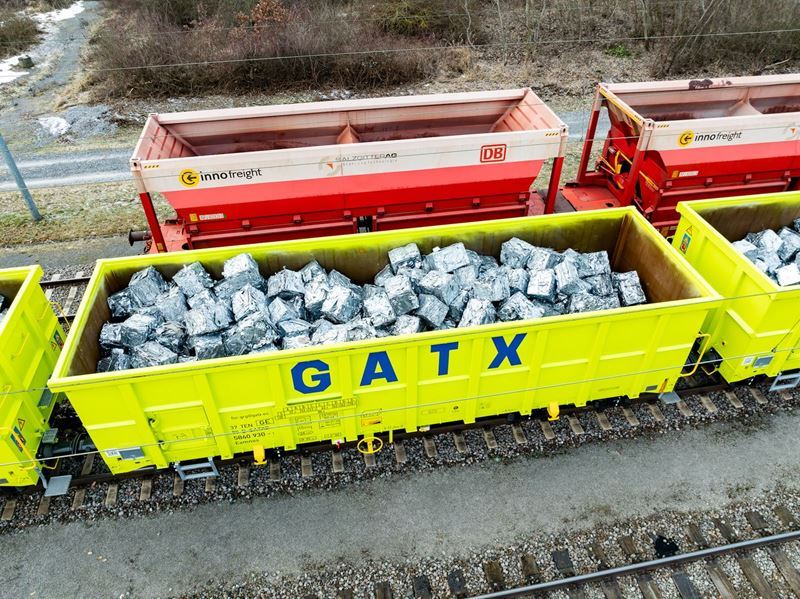
Under the project named “ScanLoop”, high quality flat steel supplied by the Salzgitter Group to Volvo Cars’ body plant in Olofström, southern Sweden, is returned to the production cycle together with scrap generated during manufacturing.
Within the scope of the application, steel and aluminum residues from the pressing process are separated into different material flows. The separated steel scrap is compressed into cubes to reduce volume during transportation. Instead of returning empty, the trains that deliver steel to Volvo Cars are loaded with scrap steel on the way back and sent to Salzgitter Flachstahl GmbH’s facilities in Germany. There, the material is melted and converted back into high quality steel products, ensuring that it remains within a closed loop.
The first train, consisting of 25 scrap wagons and measuring 545 meters in length, arrived at Beddingen station last week. The approximately 700 kilometer distance between the two locations is covered in one and a half days. Rail transport enables a low emission and efficient material flow.
A key element of the project is the continuous use of rail freight transport. The Salzgitter Group emphasized that the rail infrastructure significantly reduces emissions and supports circular economy practices across the EU. The use of interoperable locomotives with high traction capacity and 100% carbon neutral electricity for traction further enhances the system’s environmental performance.
The ScanLoop project with Volvo Cars also serves as an example of cross company cooperation within the Salzgitter Group. Sandrina Sieverdingbeck, Managing Director of DEUMU Deutsche Erz und Metall Union, stated that the cooperation embodies the circular economy approach and contributes to resource efficiency and the decarbonization of the value chain. Salzgitter Mannesmann Scandinavia, DEUMU, VPS Verkehrsbetriebe Peine Salzgitter and Salzgitter Flachstahl are all involved in the project.
Through ScanLoop, the parties aim to increase material efficiency and reduce the carbon footprint of steel production.





Comments
No comment yet.