


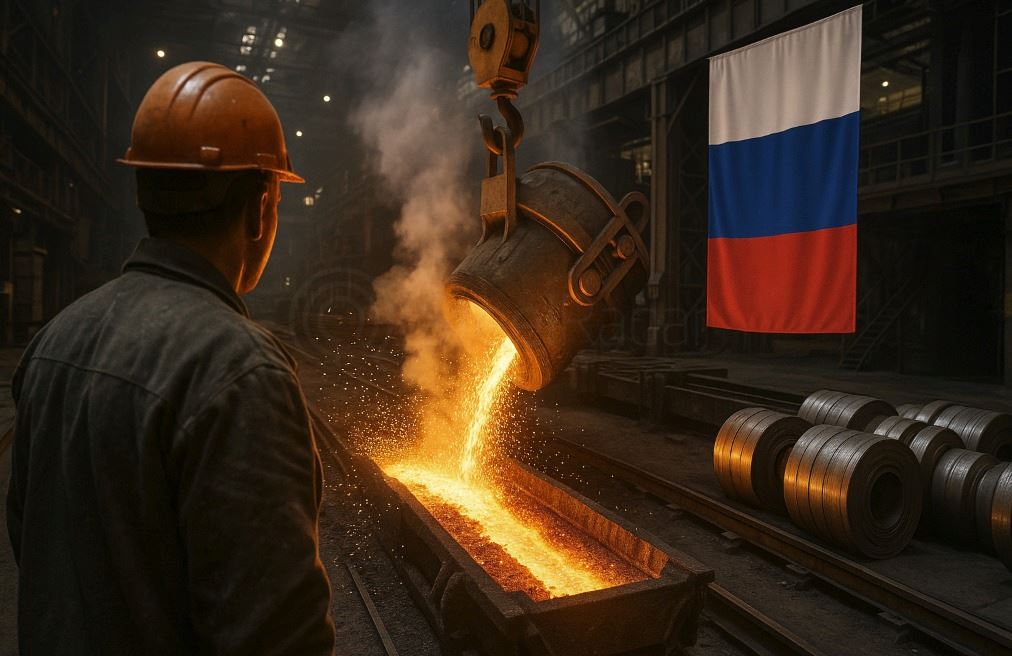
On the contrary, it occurred despite a weak market environment, driven largely by external factors rather than fundamental economic growth. Price hikes in iron ore, pellets, and particularly Australian coking coal were responses to temporary disruptions such as adverse weather affecting supply, seasonal demand spikes in China, and pre-holiday procurement. This trend represents a short-term impulse rather than a genuine market turnaround.
Producer margins are under pressure. The spread between hot-rolled coil prices and raw material costs, a key indicator of profitability, declined by 5% in January to $133/t and is down 25% compared to the 2025 average. Despite rising prices, producers are earning less. This is particularly pronounced in Russia, where domestic products continue to trade at significant discounts to global benchmarks. In January, hot-rolled coil in Black Sea ports averaged $446/t FOB, nearly $100 below prices in some Asian markets. Meanwhile, domestic raw material costs in dollar terms rose around 4%, mainly due to higher local prices and a temporary strengthening of the ruble.
The main driver of raw material price growth has been a 9–10% increase in Australian coking coal, caused by supply disruptions impacting blast furnace production. Pre-holiday raw material purchases by China added short-term pressure. Slab and semi-finished product producers, facing rising costs, began adjusting prices to pass them on to buyers, reflecting survival tactics rather than strategic market development.
Despite the current weakness, the Russian market retains potential for future growth. The significant discount to global prices creates a “stretch effect,” whereby even a modest market impulse could trigger rapid internal price increases. If the ruble weakens, import substitution, currency effects, and rising production costs could further amplify price growth.
Finished steel prices remain largely constrained. In January, increases ranged between 1–6% depending on the product segment. The first to respond are cost-sensitive items such as rebar, beams, and export billets, which set benchmarks for other categories. Overall, a broad-based price surge is unlikely in the short term. Current price growth is temporary and cost-driven, and without systemic investment recovery, lower interest rates, and the launch of major projects, steel prices will continue to move according to residual cost pressures rather than real demand.
In conclusion, the Russian steel sector faces a paradox: raw material prices are rising, profit margins are shrinking, and domestic consumption remains flat. While the discount environment provides some room for maneuver, significant price growth will depend on visible signs of recovery in the construction and engineering sectors. For now, the market remains cautious and largely in a wait-and-see mode.





Comments
No comment yet.