


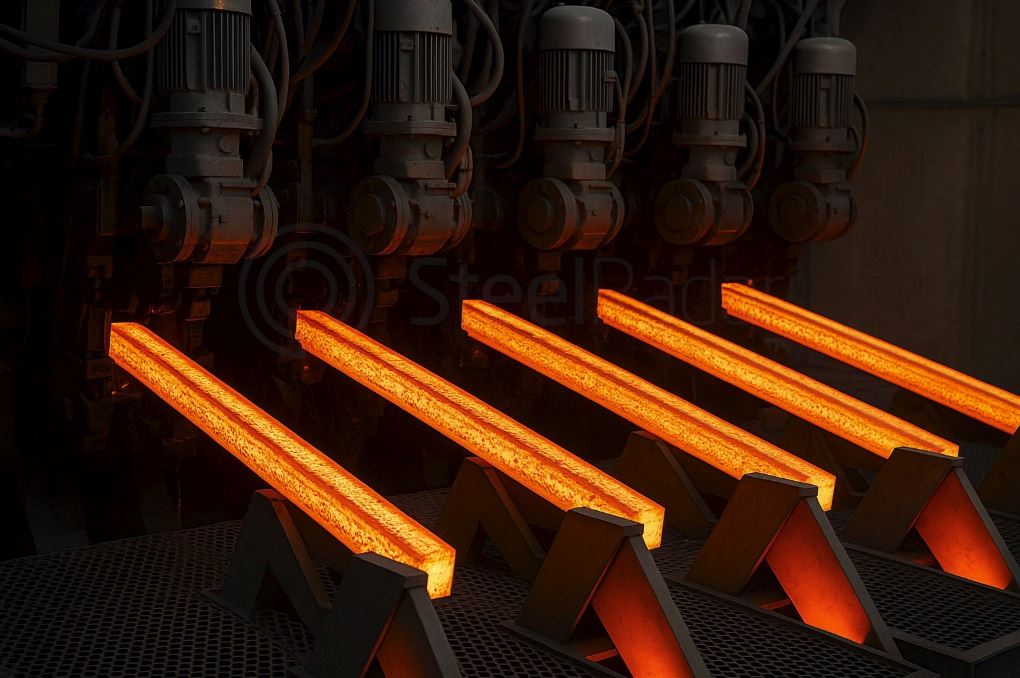
In the final week of January, Russian billet for March shipment from Black Sea ports climbed to roughly $448–450/t FOB. The increase is largely cost-driven, linked to higher expenses for raw materials, energy, and transportation. Mills are trying to defend margins at a time when domestic market conditions are still weak, and financing costs remain elevated. At the same time, actual deal discussions indicate resistance to higher numbers, with many buyers continuing to target transactions closer to $440/t FOB. This gap highlights the difference between producer expectations and workable market levels.
In Türkiye, one of the most important outlets for Russian semi-finished steel, imported billet prices have also edged up, reaching about $460–465/t CFR. Firmer scrap prices are providing support, as they directly affect the cost base for rebar production. Nevertheless, underlying demand remains fragile. Tight credit conditions are limiting purchasing power, construction activity is experiencing a seasonal slowdown, and continued inflows from Asia and other CIS suppliers are keeping competitive pressure high. Although a seasonal pickup in steel consumption is anticipated in spring, it may prove short-lived and insufficient to establish a sustained upward trend.
Competitive dynamics are becoming more pronounced. Shipments from China have expanded significantly, and other Asian suppliers have also strengthened their positions. Chinese billet offers around $440–445/t FOB are effectively capping price upside and reinforcing buyers’ cautious stance, particularly in price-sensitive markets such as Türkiye.
The slab segment remains relatively small in global trade, which means price movements can be sharp when supply and demand balances shift. The current rise in semi-finished steel prices appears to be primarily a result of cost pressure rather than a clear recovery in end-user demand, making the rally vulnerable to reversal if input cost growth stabilizes.
Looking ahead, the present price firming is widely viewed as a phenomenon of the first half of 2026, with a considerable risk of a turnaround in the second half of the year if oversupply and subdued global demand persist. Some support may come from parts of the Middle East and North Africa, where large infrastructure and energy projects can underpin consumption and create premiums for available material. In Asia, however, price gains are likely to remain constrained by weak downstream demand and ongoing pressure from Chinese exports.
Even if global slab prices continue to strengthen, the positive effect for Russian producers may be limited. Domestic steel consumption is still held back by slower economic activity, high borrowing costs, and import competition. Exports therefore, remain essential for maintaining mill utilization rates, but they are unlikely to fully compensate for the structural challenges facing the industry.





Comments
No comment yet.