


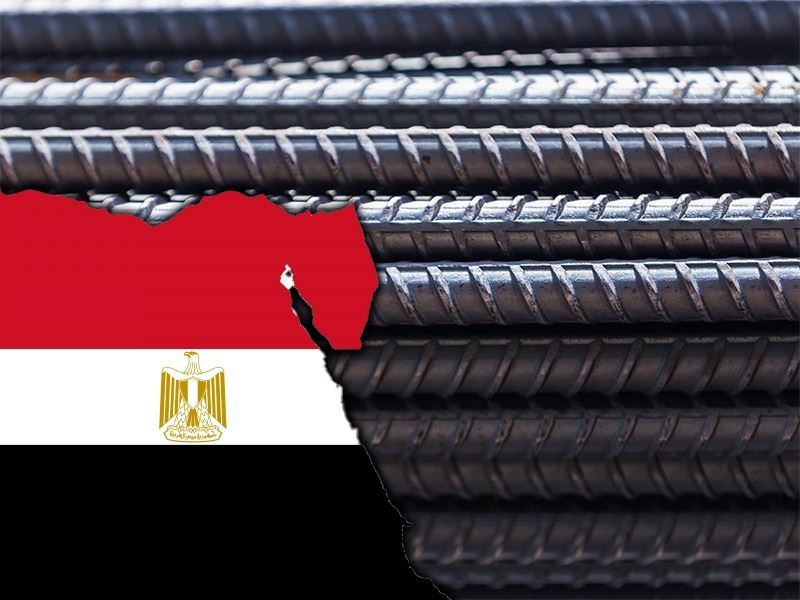
Ezz Steel, Egyptian Steel, and Al Garhy maintained stable prices in EGP/MT from December to January, showing no significant volatility. Companies such as Ezz Steel, Suez Steel, Egyptian Steel, and Al Ashri Steel experienced a slight increase in prices in $/IMT, reflecting a slight upward trend in the market. El Marakby, Madina Steel, Al Komy, Misr Steel, and several others saw a decrease in their prices in $/IMT, indicating some market softening for these suppliers.
Ezz Steel
30 Dec 38200 EGP/MT (749 $/IMT)
27 Jan 38200 EGP/MT (759 $/IMT)
Change: +10 $/IMT
Despite maintaining the same price in EGP/MT, the increase in $/IMT suggests a currency fluctuation or adjustment in exchange rates.
Suez Steel
30 Dec 48300 EGP/MT (947 $/IMT)
27 Jan 38100 EGP/MT (757 $/IMT)
Change: -190 $/IMT
A significant price decrease in both EGP/MT and $/IMT suggests competitive pressure or a strategic market move to reduce prices drastically.
Beshay Steel
30 Dec 49920 EGP/MT (979 $/IMT)
27 Jan 38200 EGP/MT (759 $/IMT)
Change: -220 $/IMT
Similar to Suez Steel, Beshay experienced a noticeable drop in prices, reflecting potential shifts in supply and demand dynamics.
Al Komy Steel
30 Dec 34500 EGP/MT (676 $/IMT)
27 Jan 32700 EGP/MT (649 $/IMT)
Change: -27 $/IMT
The decrease indicates a downward adjustment in prices possibly due to increased competition or reduced demand.
The variation in price changes among companies indicates a highly competitive market where manufacturers are strategically adjusting their prices to gain or maintain market share.
Changes in $/IMT suggest that exchange rate movements have impacted the pricing in the Egyptian steel market, highlighting the importance of monitoring currency trends.
Companies reducing prices might be positioning themselves to capture more market share or responding to reduced input costs, while those increasing prices might be capitalizing on increased demand or premium product offerings.
USD 1= EGP 50.35
.jpeg)




Comments
No comment yet.