


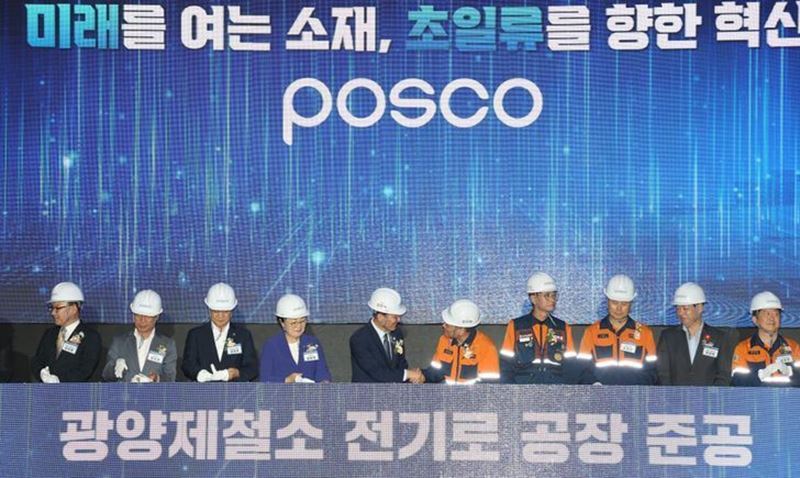
Construction of the plant began in February 2024 and was developed as part of POSCO’s broader strategy to align with tightening global decarbonization policies and to meet rising demand for low-emission steel products.
The project required an investment of approximately 600 billion won (around 392.6 million USD), with a total workforce of about 270,000 involved during the construction phase.
Low Carbon Production Through Electric Arc Furnace Technology
Unlike conventional blast furnace–basic oxygen furnace (BF-BOF) routes, electric arc furnaces primarily use recycled steel scrap as the main raw material. This production method not only transforms the manufacturing process but also contributes significantly to reducing carbon emissions.
POSCO estimates that this production system can reduce carbon emissions by up to 75% compared to the average emissions from traditional blast furnace operations used between 2017 and 2019.
To improve the quality of steel produced in electric arc furnaces, the company has also developed a proprietary hot metal–scrap mixing technology, which blends materials derived from both blast furnaces and electric furnaces during the refining process.
This approach is designed to both reduce emissions and support the production of high quality steel products.
POSCO plans to commercialize high value added steel products such as automotive steel sheets and electrical steel by 2030.
“More Than Just a Facility” Emphasis
During the inauguration ceremony held at the Gwangyang plant, POSCO Group Chairman Chang In-hwa emphasized that the investment represents more than just a production facility.
He stated that the project reflects POSCO’s commitment to global decarbonization efforts and its determination to reshape competitiveness in the steel industry.
He also noted that POSCO will continue to meet growing global demand for low-carbon steel while strengthening its position in advanced materials.



Comments
No comment yet.