


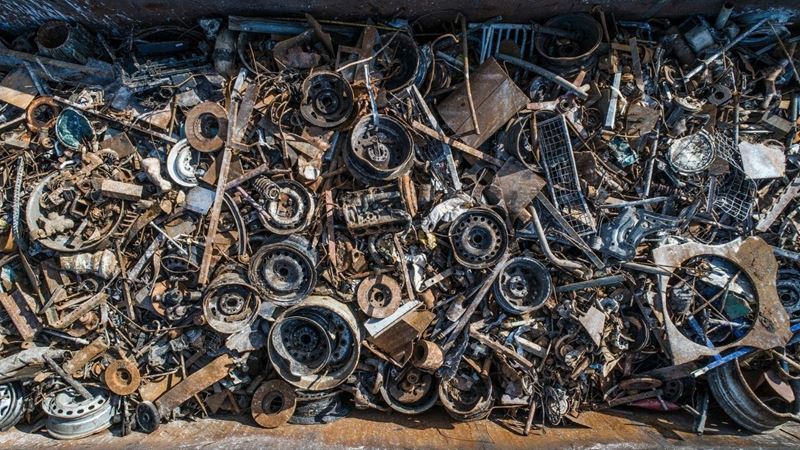
The dispute has emerged at a time when the European Union continues to provide political, financial, and military support to Kyiv following Russia’s attacks on Ukraine. While Poland has been one of Ukraine’s strongest supporters during the war, recent issues involving agricultural products, transit transportation, and scrap trade have strained relations between the two countries.
As of 1 January 2026, Ukraine began applying a zero export quota on ferrous scrap. This decision has largely halted shipments of a key raw material, particularly used in electric arc furnaces (EAFs). Poland’s Ministry of Economic Development and Technology stated that the restrictions are disrupting supply chains and risk increasing production costs.
The ministry noted that around half of Poland’s steel production is carried out in scrap-based electric arc furnaces, and emphasized that Ukraine has long been one of the country’s most important scrap suppliers. Officials warned that potential raw material shortages could lead to higher costs, weakened competitiveness, production disruptions, and job losses.
The Ukrainian side argues that the restrictions were introduced to protect the domestic steel industry under wartime conditions. Polish industry representatives, however, claim that the policy lowers costs for Ukrainian producers while driving prices higher for companies within the EU.
Poland’s Ministry of Economic Development and Technology also stated that it had contacted Ukrainian authorities before the ban entered into force. A letter sent to Kyiv in December 2025 requested that the planned restrictions not be implemented, but the initiative did not yield any results.
Following the lack of response, Poland escalated the issue to the European Commission. The Warsaw government argues that the zero export quota effectively constitutes a ban and has called on Brussels to intervene urgently. The ministry added that the matter will remain on the agenda in future bilateral talks with Ukrainian officials.




Comments
No comment yet.