


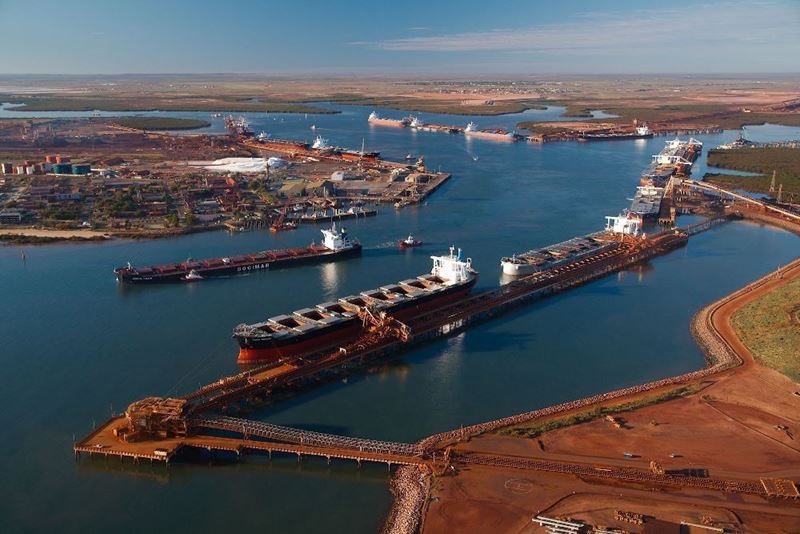
China remained the largest destination for iron ore shipments from the port, with 37.9 million tonnes.
According to Pilbara Ports data, a total of 45 million tonnes of cargo was shipped from Port Hedland Port in July. Of this, 44,224,980 tonnes consisted of iron ore shipments.
Iron ore shipments, which stood at approximately 51.7 million tonnes in June 2026, decreased by 14.5% month-on-month in July. Shipments also declined by 3.8% year-on-year.
Iron ore shipments to China fell by 16.1%
Iron ore shipments from Port Hedland Port to China totaled 37,856,534 tonnes in July. Shipments to China decreased by 16.1% month-on-month and 2.9% year-on-year.
China accounted for approximately 86% of total iron ore shipments from Port Hedland in July.
China was followed by South Korea with 2,276,862 tonnes and Japan with 2,064,734 tonnes.
During the same period, 1,007,588 tonnes of iron ore were shipped to Vietnam, 462,913 tonnes to Indonesia, 215,890 tonnes to Malaysia, 190,538 tonnes to India and 149,921 tonnes to Taiwan.
Total cargo volume at Pilbara Ports declined by 1%
Pilbara Ports recorded a total cargo volume of 63.8 million tonnes in July 2026. This volume represented a 1% decline compared with the same period last year.
Imports through Port Hedland Port totaled 250,000 tonnes, up 4% from July 2025.
Dampier Port’s total cargo volume increased by 3% year-on-year to 14.7 million tonnes. The port’s import volume also increased by 17% to 115,000 tonnes.
Pilbara Ports stated that changes in cargo volumes can be affected by various factors, including market conditions, weather conditions, port maintenance activities and customer requirements.





Comments
No comment yet.