


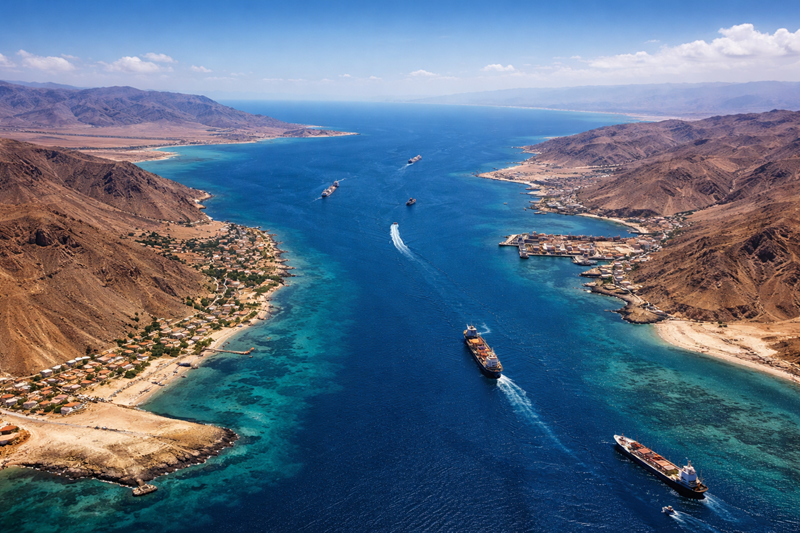
Ali Akbar Velayati, advisor to Iranian Supreme Leader Ayatollah Mojtaba Khamenei, stated on social media: “The Resistance Axis command center views Bab el-Mandeb as a critical chokepoint similar to the Strait of Hormuz. If the White House continues its mistakes, energy flows and global trade could be disrupted with a single move.”
U.S. President Donald Trump, in his own social media posts, reiterated his call for the Strait of Hormuz to remain open, warning that Iran would face serious consequences otherwise.
Market participants speaking to SteelRadar noted that the geopolitical tension in the region is already affecting energy and raw material flows. One source stated that due to disruptions in oil and gas flows from the Middle East and Iran to Asian countries, suppliers are shifting toward Russian-origin bulk shipments; however, the longer transit times of these vessels are causing delays on the supply side. The same source added that energy shortages are increasing steel production costs and putting upward pressure on prices.
Another market participant pointed out that the reduction in vessel supply in the region and the security risks on certain sea routes have driven up freight costs, while vessel shortages are slowing down trade flows. It was also noted that vessels needing to refuel via these straits are being forced to divert to alternative ports, further increasing operational costs.
The same source emphasized that these developments are directly impacting company operations, with commercial activities slowing down on the South America, Caribbean, and Mexico routes, and suppliers struggling to secure vessels for these destinations. On the Europe route, vessel costs have risen significantly, and freight rates are changing rapidly due to the volatile nature of the market. Rising raw material prices and gas shortages are pushing up production costs, which in turn are increasing import prices.
Another market source highlighted that although Iran does not have a direct coastline on the Bab el-Mandeb Strait, its close ties with the Houthis in Yemen allow it to exert influence in the area. According to the source, a full closure of the strait does not require a large-scale naval blockade; even a limited number of anti-ship missile attacks, drone operations, or naval mines could render passage commercially too risky, causing traffic to stop almost immediately.
The same assessment underlined that trade between the Indian subcontinent and Europe would be more severely affected, as this route forms a major part of the main corridor passing through the Suez Canal.
According to market evaluations, any disruption in the Bab el-Mandeb Strait would effectively disable the Suez Canal, forcing vessels to sail around Africa via the Cape of Good Hope. This would extend transit times by 10–20 days, cause significant increases in freight and insurance costs, and lead to delays in global supply chains. The oil, energy, and steel sectors are expected to be directly impacted. Shipments from the Far East to Europe and Turkey are forecasted to face both longer durations and increased cost pressures.
Meanwhile, just days ago, Iranian Parliament Speaker Mohammad Bagher Ghalibaf made statements indicating that pressure on Bab el-Mandeb could be intensified, signaling a potential shift in Tehran’s approach to these critical chokepoints.
Market sources stress that while the probability of a complete closure remains low at present, the rising geopolitical risk is already beginning to affect freight rates, delivery times, and supply chain planning.






Comments
No comment yet.