


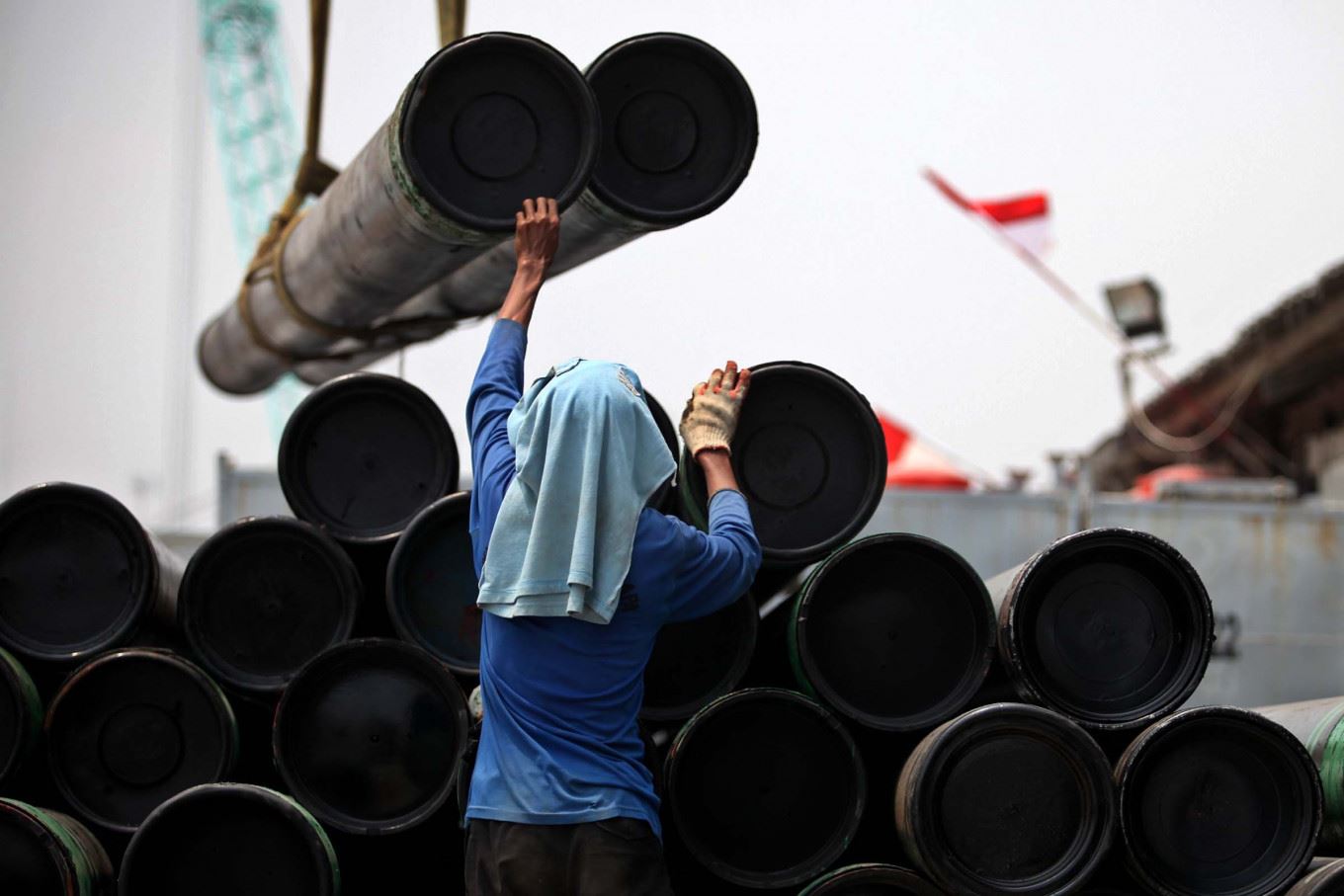
Trade Minister Budi Santoso stated that Indonesia has now become one of the world’s top five iron and steel exporters, emphasizing that this success is the result of the government’s value-added industrialization and downstreaming policies.
Speaking at a February 4 meeting with the House of Representatives’ 6th Commission in Jakarta, Santoso said that while Indonesia ranked 17th in 2019, it has now climbed to fifth place after China, Germany, Japan, and South Korea. He added that strengthening domestic industrial capacity and processing raw materials into value-added products have been key drivers of this rise.
According to ministry data, Indonesia’s iron and steel trade has recorded strong surpluses in recent years. In 2023, the country achieved USD 25.80 billion in exports and a trade surplus of USD 15.07 billion. In 2024, exports increased to USD 27.97 billion while imports decreased to USD 9.53 billion, resulting in a trade surplus of USD 18.44 billion. Santoso emphasized that this trend strengthens Indonesia’s position in global trade.
Ministry records show that the country has posted continuous surpluses in iron and steel trade since 2020. The figures were USD 6.85 billion in 2020, USD 11.96 billion in 2021, USD 13.93 billion in 2022, and USD 11.40 billion in 2023.
Deputy Minister of Industry Faisol Riza stated that Indonesia’s steel export volume has increased significantly over the past six years. Exports rose from 9.3 million tons in 2020 to 23.97 million tons in 2025. During the same period, imports peaked at 17.9 million tons in 2022 and decreased to 14.8 million tons last year. Riza emphasized that this development results from a combination of government policies, domestic production growth, global prices, and geopolitical factors.
Strategic steps for the steel sector
Riza highlighted that the steel sector is the backbone of national development, emphasizing that strengthening it will remain a priority. He stated that the Ministry of Industry, together with sector representatives, has prepared a comprehensive strengthening program, with a primary focus on protecting domestic producers against unfair trade practices.
This includes implementing trade defense measures against imports, rapidly adopting more efficient and environmentally friendly technologies, and modernizing production facilities. Additionally, mandatory application of the Indonesia National Standard (SNI) for finished steel products in direct contact with consumers aims to enhance quality and market confidence.
On the raw material side, investment in crude steel is planned to increase, aiming to meet domestic industrial demand internally and reduce dependence on imports. Value-added investments are also encouraged to support steel production for shipbuilding, automotive, defense, and construction sectors.
Krakatau Steel and capacity expansion
State-owned investment and asset management company Danantara is actively supporting the transformation of the steel sector. Danantara COO Dony Oskaria stated that the state company Krakatau Steel has achieved a healthier financial structure thanks to restructuring and reforms.
Oskaria announced that a new project, with its foundation to be laid next month, will add 3 million tons to the country’s steel production capacity. He emphasized that this capacity increase is critical for meeting domestic steel demand, which still depends on imports.
Goal of industrial integration
Danantara also aims to integrate the steel sector with major steel users, including shipbuilding and rail sectors. The state shipyard PT PAL Indonesia will become the center of the national shipbuilding industry. On the railway side, PT INKA’s production capacity will be expanded, and train manufacturing and maintenance processes will be required to be carried out domestically.
Officials emphasized that these policies aim to make Indonesia’s steel sector more competitive, sustainable, and less dependent on foreign sources.




Comments
No comment yet.