


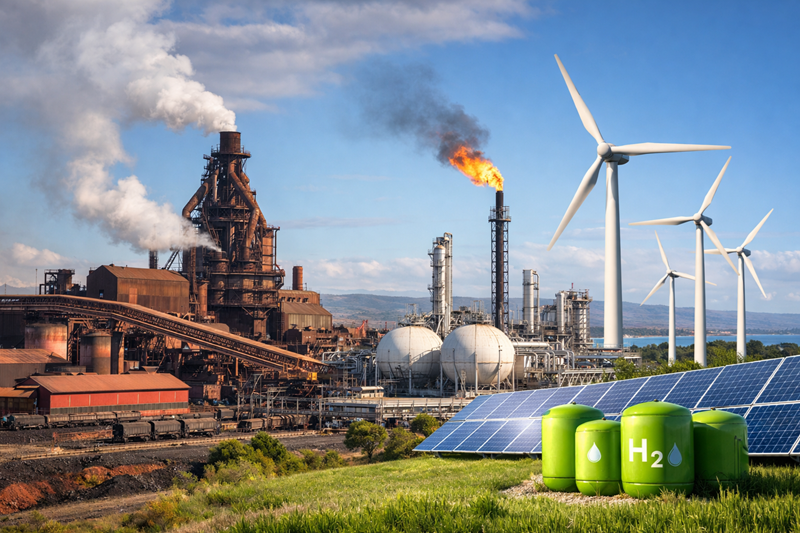
Nicholas stated, “South Australia is wasting its opportunity to lead in global green iron and steel by locking in gas use.”
Nicholas emphasized that the government’s recent decision to shelve green hydrogen projects reflects a misinterpretation of the current state of the transition to low emission iron and steel. “The early use of green hydrogen is now becoming a global benchmark. While green steel and green hydrogen projects are advancing rapidly worldwide, South Australia’s continued reliance on natural gas may provide short term relief for Whyalla, but it will not establish a foundation for a developing domestic steel industry in the long term,” he stated.
Simon Nicholas recalled that South Australia had been in a world leading position with the Green Iron and Steel Strategy published two years ago and said, “Unfortunately, since then the state has lost this position and fallen behind other global regions.”
Criticizing the 10 year, 200 PJ gas supply agreement signed with Santos, Nicholas evaluated it as an indication that the government believes shifting from one fossil fuel to another is the only way to secure Australia’s steel sector. “A large portion of the 200 PJ gas is allocated for the transition of the Whyalla steel plant from a coal based blast furnace to direct reduced iron technology that can operate with gas or green hydrogen, or both. However, gas based DRI still produces high emissions and green iron and steel cannot be produced with gas,” he stated.
Nicholas recalled that the planned Whyalla DRI facility initially aimed to operate with a blend of green hydrogen and gas. “The 2024 Santos/GFG memorandum of understanding stated that when the DRI plant becomes commercially viable at scale, it will fully transition to green hydrogen, using a mixture of natural gas and green hydrogen as the reducing agent. However, since then the South Australian government has lost interest in this transition. The government announced that gas will be dominant for the Whyalla steel plant and shelved its green hydrogen plans,” he stated.
Emphasizing that the global steel technology transition is being misinterpreted, Simon Nicholas said, “Although there has been a slowdown in green hydrogen developments worldwide, its role in low emission iron and steel production is strengthening. Early green hydrogen use in DRI plants is now becoming a benchmark.”
Nicholas also referred to international examples: “Meranti Green Steel will use 15% green hydrogen and 85% gas in the reduction mix from the first day at its new DRI plant in Oman, and will later increase the share of green hydrogen. Oman has much cheaper gas compared to Australia’s east coast gas market and has clearly overtaken South Australia in the past two years. Gas is not an area of comparative advantage for South Australia.”
The analyst also recalled that according to Hydrogen Insight, almost all of the 59 new hydrogen projects that started construction in 2025 are green hydrogen projects, and emphasized that “South Australia is missing the global green steel opportunity by remaining dependent on natural gas.”




Comments
No comment yet.