


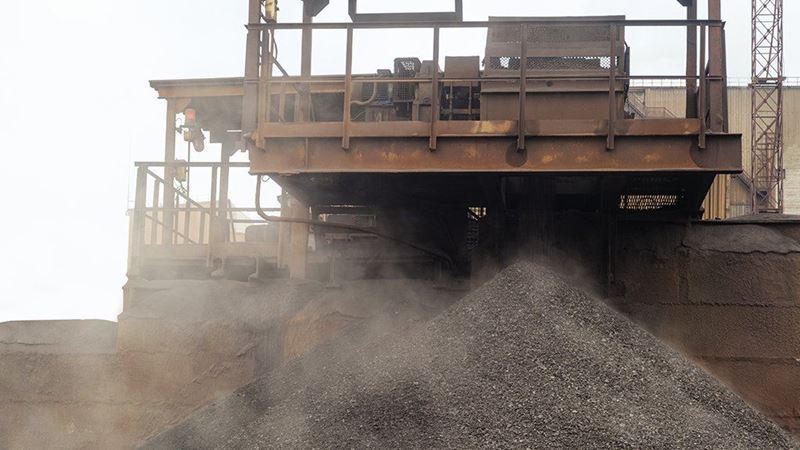
Nicholas noted that conditions have changed significantly since 2018, warning that transferring coal operations to pure-play coal companies through a spin-off would not reduce global emissions and could, in fact, risk increasing them.
The analysis recalls that although Rio Tinto fully exited coal assets in 2018, a full merger with Glencore would effectively bring the company back into the coal sector. Market discussions suggest that, on the one hand, the coal business could be separated following a merger, while on the other, Rio may be willing to retain coal operations in order to gain access to Glencore’s assets, particularly copper. This situation could pose challenges for some Rio investors, especially those with policies and criteria that prohibit investments in coal.
Nicholas emphasizes that Glencore’s coal portfolio is predominantly composed of thermal coal, which is a point of sensitivity for investors. While coal exits were widely viewed as a responsible step in 2018, Nicholas notes that the effectiveness of this approach is increasingly being questioned today. He underlines that changing ownership of coal assets does not eliminate emissions but merely shifts them onto different balance sheets.
The analysis also points to BHP’s decision in 2022 to close its Mt Arthur thermal coal mine in a controlled manner rather than selling it, a move that some investors considered to be “more appropriate in terms of real-world carbon impact.” By contrast, transferring coal assets from major miners to pure-play coal companies could encourage new capacity investments and lead to less focus on emissions management.
According to IEEFA, similar risks were highlighted in 2024 when the possibility of Glencore separating its coal assets came onto the agenda. The organization warned that transferring coal assets to pure-play players could increase appetite for opening new mines and weaken accountability for emissions. At the time, some Glencore investors also argued that a rapid sale of assets would not deliver the best outcome, advocating instead for controlled downsizing and phased exit plans.
Nicholas adds that pure-play coal companies tend to present more optimistic long-term demand projections for coal, while developments such as South Korea’s decision to phase out thermal coal consumption by 2040 complicate the outlook for coal’s future. He also notes that the long-term outlook for metallurgical coal is coming under increasing pressure.
The analysis further highlights that smaller, single-commodity coal companies may struggle to address methane emissions or to cover post-closure mine rehabilitation costs. For this reason, IEEFA argues that, in the event of a potential Rio Tinto–Glencore merger, the most responsible approach would be to retain coal mines, halt new capacity investments, progressively scale down existing operations in a controlled manner, and implement effective rehabilitation processes.
According to Simon Nicholas, an ownership structure that is not strategically dependent on coal would be better positioned to focus on reducing emissions, particularly Scope 3 emissions. Finally, the analysis states that Rio Tinto investors’ policies and investment criteria should be assessed in a way that allows for this more responsible transition approach.



Comments
No comment yet.