


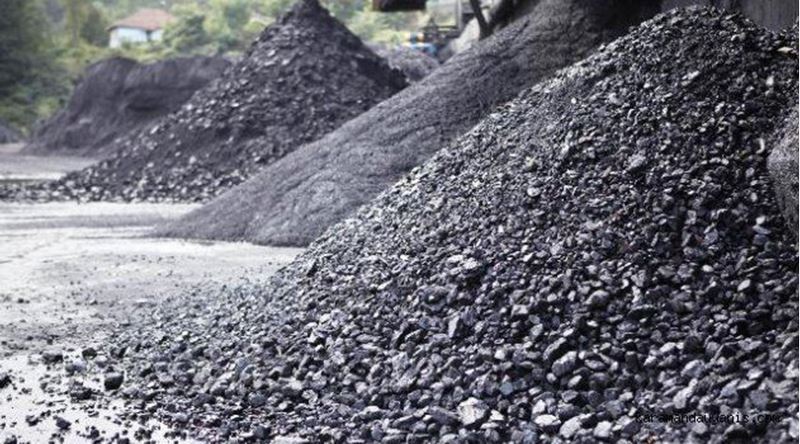
The Institute for Energy Economics and Financial Analysis (IEEFA) report titled “Global high-grade iron ore market set for growth” examines the transformation underway in the steel industry as it shifts toward low-emission production. At the center of this transition is direct reduction (DR) technology, which requires high-grade iron ore with lower impurity levels.
According to the report, established producers in Canada, Brazil, and the Nordic region are being joined by emerging players in Africa and the Middle East, all moving toward the production of DR-grade raw materials. However, demand is rising so rapidly that a global supply gap is expected to emerge in the coming years.
Supply gap creates opportunities for new entrants
Soroush Basirat, Global Steel Energy Finance Analyst at IEEFA and author of the report, notes that a growing number of direct reduction plants are unable to secure access to DR-grade raw materials locally. This is expected to increase pressure on the seaborne global market for DR-grade ore. Basirat emphasizes that multiple projections point to a likely supply deficit.
He adds that the high-grade iron ore market represents a significant opportunity that new suppliers should not overlook.
Strategic risks and opportunities for Australia
Iron ore remains Australia’s largest export commodity. However, the country’s production is largely composed of lower-grade ore suitable for traditional blast furnace-based steelmaking. This could pose long-term risks, particularly as China—its largest export market—shifts toward low-emission iron production.
According to Basirat, this transition presents a critical opportunity for Australia to diversify its demand base. Otherwise, the country risks losing its strategic relevance in a market increasingly shaped by decarbonization.
Magnetite potential and time pressure
Although Australia currently has limited capacity for high-grade iron ore production, it holds significant potential in magnetite mining, which is essential for producing higher-grade material. However, developing new magnetite-based production capacity can take many years.
Most projections suggest that the global supply gap will become more pronounced after 2030. In this context, Australia is expected to position itself to support the decarbonization goals of its traditional Asian trade partners. Basirat notes that bringing new deposits into production could take around a decade, but this timeline may align with the ramp-up of planned direct reduced iron (DRI) projects globally.
Tracking tool updated
Alongside the report, IEEFA has released an updated version of its Australia Green Iron Tracker. The tool provides an interactive dataset that allows users to visualize existing projects across Australia’s low-emission iron production value chain.
The updated version also includes a new section covering the current state of global competition for high-grade iron ore supply. The report itself draws extensively on this dataset. Basirat highlights that the update sheds light on the competitive landscape Australia faces as it seeks to benefit from the global transition toward green iron and steel production.





Comments
No comment yet.