


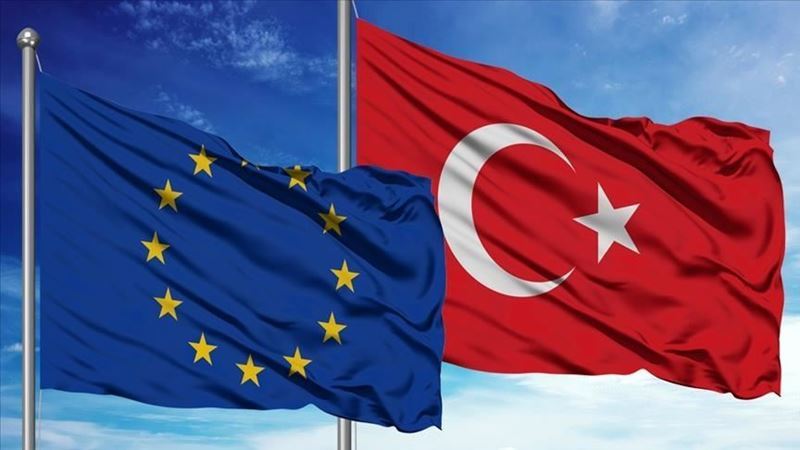
The European Union’s free trade agreement with the South American trade bloc MERCOSUR, along with its ongoing negotiations with India and several Asian countries, is creating a disadvantage for Türkiye due to the current structure of the Customs Union. Business representatives warn that this process could weaken Türkiye’s trade competitiveness.
If the free trade agreement signed between the EU and MERCOSUR on January 17 enters into force, countries such as Argentina, Brazil, Paraguay and Uruguay will gain preferential access to the Turkish market. However, since Türkiye is not a party to these agreements, it will not benefit from similar privileges in those countries. For the agreement to take effect, it must be approved by the European Parliament and the legislative bodies of MERCOSUR member states. Once the approval process is completed, trade volume between the EU and MERCOSUR is expected to rise rapidly from EUR 111 billion in 2024 to over EUR 150 billion.
Commenting on the issue, Alper Üçok, TÜSİAD’s Representative in Germany, said the EU has accelerated its free trade agreements to expand its trade network at a time of increasing global uncertainty. Üçok noted that the EU has intensified negotiations with countries such as India, Thailand, Malaysia, Australia, the Philippines and the United Arab Emirates, adding that expectations for a near term agreement with India have grown.
Üçok emphasized that the EU’s pursuit of new FTAs without updating the Customs Union with Türkiye could lead to negative commercial consequences. Recalling that trade volume between the EU and Vietnam increased by 35% following the agreement signed in 2020, he said similar outcomes could be expected for other countries, while growth in Türkiye–EU trade has remained limited.
Üçok also underlined that new agreements could have implications on the investment front, noting that FTAs cover not only trade but also investment protection, services and access to public procurement. This could result in EU-based investments being redirected to other countries instead of Türkiye. He added that a potential agreement with India could have geopolitical and geoeconomic implications in addition to trade effects.
Mustafa Gültepe, Chairman of the Turkish Exporters Assembly (TEA), said the EU’s recent moves are reshaping global supply chains. He noted that by diversifying sourcing options across regions, the EU is spreading risks. According to Gültepe, this sends Türkiye the message that it is “important, but not indispensable,” highlighting the growing importance of competitive pricing and value-added production.
Gültepe stated that MERCOSUR countries are mainly strong in low and medium low technology products, and therefore the impact on high-tech exports is expected to be limited. However, he warned that India is a strong exporter in sectors such as chemicals, electronics, automotive and defense industries, which could increase competitive pressure on Türkiye.
Ayhan Zeytinoğlu, President of the Economic Development Foundation, described the EU–MERCOSUR agreement as one of the world’s largest free trade agreements. He noted that the EU has trade agreements with around 80 countries and regions, while Türkiye has approximately 24 FTAs.
Zeytinoğlu pointed out that countries with FTAs with the EU gain advantageous access to the Turkish market through the Customs Union, while Türkiye does not enjoy reciprocal benefits. He said that Türkiye's trade deficit increased following agreements with countries such as Canada, Vietnam, South Africa and Mexico, adding that new FTAs could further exacerbate this risk.
Experts and business representatives agree that recent developments have made the modernization of the Türkiye–EU Customs Union more urgent than ever. Updating the Customs Union to include areas such as services and public procurement, along with improving the investment environment, is seen as critical for maintaining Türkiye’s competitiveness in trade relations with the EU.
Sourced by: Ekonomim





Comments
No comment yet.