


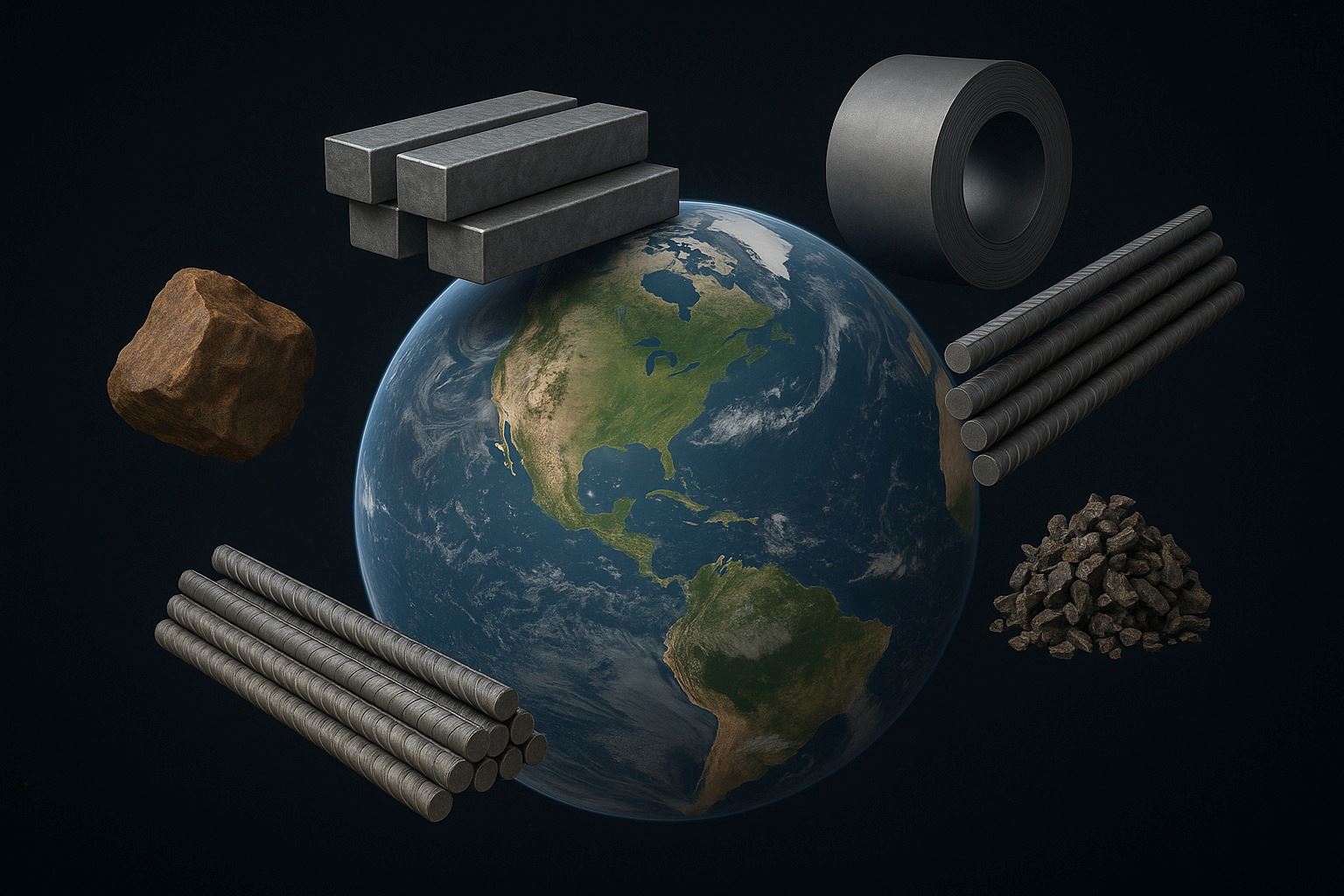
According to the Organisation for Economic Co-operation and Development (OECD), global excess steelmaking capacity surpassed 560 million tonnes in 2025 and could reach 721 million tonnes by 2027 when accounting for planned new projects.
At the center of this crisis is China, which continues to produce around 1 billion tonnes of steel annually, more than half of the world’s output. With domestic demand stagnating, the surplus is increasingly redirected to export markets, putting downward pressure on prices globally and destabilizing other steel-producing economies.
Steel prices have dropped to five-year lows, with hot-rolled coil (HRC) prices in Asia falling to $500–520 per tonne, largely due to aggressive Chinese export activity. Attempts by local producers to shield themselves through trade barriers have had limited success so far.
However, technical analysis suggests a potential stabilization on the horizon. Futures contracts indicate the possibility of a market turnaround, especially if Chinese export volumes decrease or if major infrastructure initiatives are launched in Southeast Asia and the Middle East.
Some sectors continue to offer support to the steel market, particularly green energy projects, transportation infrastructure, and large-diameter pipe production. Domestic demand in India, Brazil, and Vietnam has shown moderate resilience, while in developed economies, consumption remains sluggish but is somewhat supported by urban infrastructure upgrades and partial import substitution.
According to forecasts by the World Steel Association, global steel demand is expected to begin recovering by late 2025 to early 2026. This rebound will likely be driven by the end of the low-price dumping cycle, accelerated infrastructure spending, and the transition toward green steel production.
On this basis, analysts believe that a fair price range of $600–650 per tonne could return within the next 12–18 months, providing much-needed stability and encouraging renewed investment in the sector.





Comments
No comment yet.