


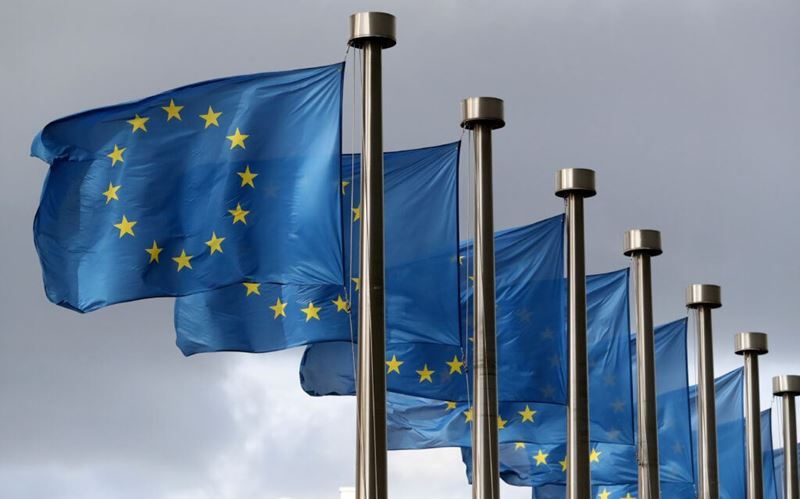
According to a report on the Euronews website, the European Commission has not yet completed the technical work on the Industrial Acceleration Act proposal, which lies at the center of the Union’s industrial strategy.
Disagreements persist over the content of the regulation, which envisages that member states prioritize the “Made in Europe” requirement when using public funds and in public tenders. The proposal, previously postponed several times and most recently scheduled for announcement on February 26, has now been pushed back to March 4.
The draft is being prepared by the team of European Commission Vice-President Stéphane Séjourné. The regulation aims to give an advantage to products manufactured in Europe in public procurement and publicly supported programs across various sectors, particularly energy-intensive industries, net-zero technologies, and the automotive sector.
Leaked draft texts indicate that the term “Made in Europe” covers not only the 27 EU member states but also the countries of the European Economic Area — Norway, Iceland, and Liechtenstein. However, the Commission is also considering defining reliable partners whose production could be deemed equivalent to EU origin and including them within the scope.
Among the countries leading the initiative is France, while some member states — including Germany — argue that a local-product requirement could deter investment, increase costs in public tenders, and weaken the EU’s global competitiveness. Germany contends that the definition of “Made in Europe” is too narrow and proposes adopting a “Made with Europe” approach that includes trade partners.
Turkey, citing the Customs Union, the current level of economic integration, and regulatory alignment, states that Turkish producers should also be evaluated within the “Made in Europe” framework. In Europe, some industry representatives — particularly in the automotive sector — are likewise calling for the inclusion of the United Kingdom and Türkiye.
After the Commission publishes the proposal, the regulation is expected to be amended during legislative negotiations between member states and the European Parliament.




Comments
No comment yet.