


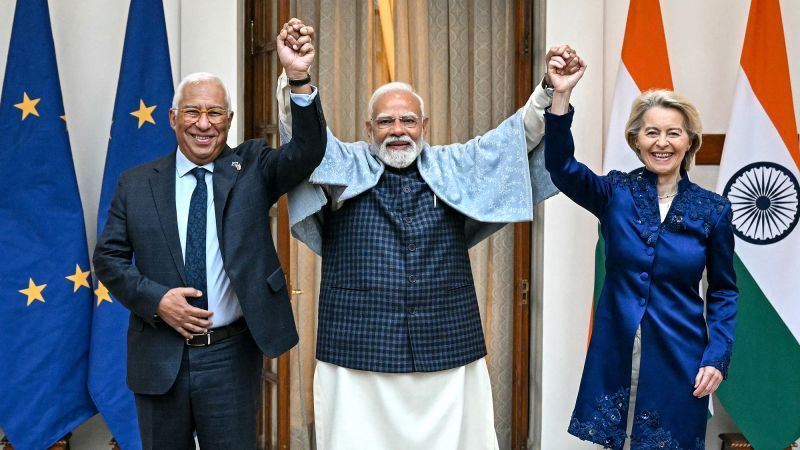
The agreement is expected to open India’s traditionally tightly protected market more widely to the EU’s 27 member states, particularly across manufacturing and services. In exchange for easier access for Indian textile, jewelry, and pharmaceutical exports, the deal is set to facilitate the entry of major European products into the Indian market, notably automobiles and wine.
According to a statement from the EU, customs duties will be eliminated or reduced on 96.6 percent of traded goods by value under the agreement. This measure is expected to double EU exports to India by 2032 and generate around EUR 4 billion in customs duty savings for European companies.
Following her meeting with Indian Prime Minister Narendra Modi in New Delhi, von der Leyen stated that Europe and India are making history, adding that they have created a free trade area that will benefit both sides and affect two billion people. She has previously emphasized that exports to India could increase twofold once the agreement is implemented.
With a population of 1.4 billion, India is the world’s most populous country and is also among the fastest growing economies. According to the International Monetary Fund, the country is on track to become the world’s fourth largest economy this year. Prime Minister Modi emphasized that the agreement represents nearly one third of global trade, describing it as the largest free trade agreement in history.
Under the agreement, India will reduce customs duties on automobiles from levels as high as 110 percent to 10 percent within five years. This is expected to provide significant advantages to European automakers such as Volkswagen, Renault, Mercedes Benz, and BMW. In addition, up to 250,000 vehicles produced in Europe will be eligible for export to India under preferential tariff rates.
Trade talks between the two sides first began in 2007 but were suspended due to disagreements over access to the automobile, agriculture, and dairy sectors. Negotiations resumed in 2022 and have accelerated over the past six months. Trade pressures stemming from the United States and China also played a role in speeding up the process.



Comments
No comment yet.