


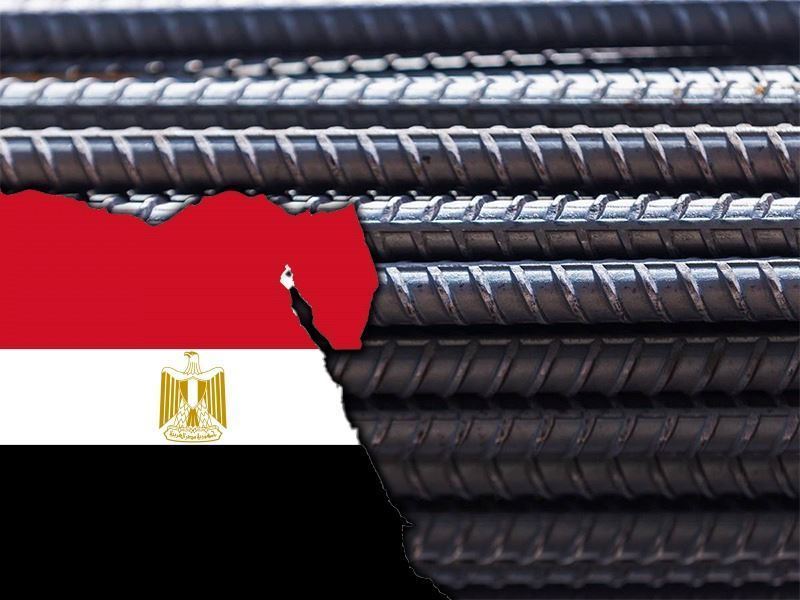
Egypt's rebar market experienced varied price movements throughout September 2025, according to the latest data released by SteelRadar. While some producers significantly increased their prices, others kept them steady or even lowered them despite currency fluctuations.
The EGP depreciated slightly against the USD, with the exchange rate shifting from 48.65 EGP/USD on August 31 to 48.20 EGP/USD on September 30. Despite this, rebar prices in USD showed mixed trends.
Some of Egypt’s leading manufacturers opted to keep prices steady:
Ezz Steel: Held at 38,200 EGP/MT, but USD price increased slightly by $7 due to exchange rate.
Egyptian Steel: Same local price (38,100 EGP/MT), USD price rose $7.
Arco Steel, Al Garhy, Al Ashry Steel: No change in local currency, but slight dollar gains (+$7).
Egypt’s steel sector has ground to a halt due to low-cost imports and sluggish construction demand. While the government’s 16.2% tariff has failed to revive the market, the Ministry of Industry is seeking to attract investors through a new incentive package supporting factories that produce cold-rolled, galvanized, and coated steel sheets.
Egypt’s construction steel market has come to a standstill since May, largely due to low-cost rolled imports from Russia and China. Industry sources note that in the absence of demand, price adjustments have become “purely theoretical.”
In response, the Egyptian government imposed a 16.2% tariff on rolled imports, setting a minimum cost of 4,613 EGP per ton. While initially intended to protect domestic producers, the tariff has created deep divisions within the market and failed to stimulate trade.
However, industry sources report that none of these pricing maneuvers increased sales volumes. A senior trader stated, “We now have a higher cost base but zero transactions. Until construction activity resumes, price lists are nothing more than paper.”
Another Egyptian official also emphasized the stagnation, saying;
“The market is very quiet; for small steel mills, the rebar market is almost dead. Small mills raised prices to an average of 3,700 EGP, but nobody is buying.”
Experts highlight that high interest rates, currency fluctuations, and project delays are driving the downturn, stressing that no tariff or pricing strategy alone can revive demand. Additionally, cheap steel flows from China, Russia, Libya, and Japan, combined with the impact of U.S. tariffs, are pushing producers to redirect surplus stocks to countries such as Egypt and Türkiye.
.jpeg)




Comments
No comment yet.