



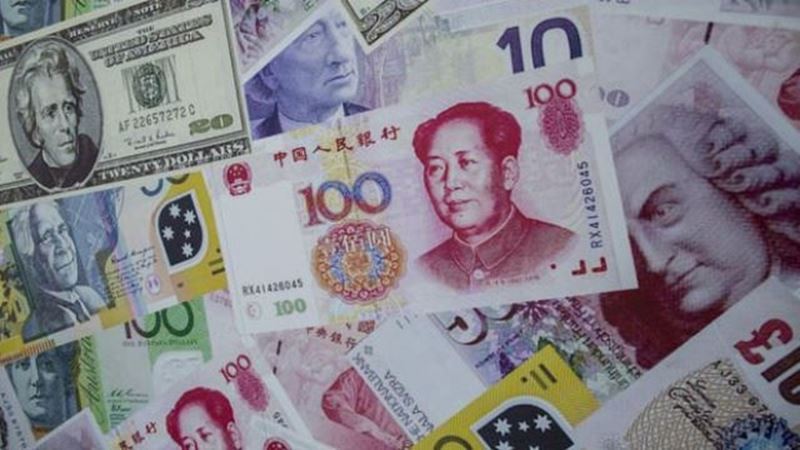
Miao Yanliang, chief strategist at China International Capital, wrote in an article published on Tuesday that the right conditions have emerged to implement reforms without triggering large-scale capital outflows. Miao, a former chief economist at China’s State Administration of Foreign Exchange, said: “The more the capital account is opened and the greater the flexibility of the exchange rate, the more capital China can attract. We are entering a period in which the US dollar is undergoing a strategic and sustained cycle of depreciation, while the yuan is moving into an appreciation phase. From this perspective, the timing is right.”
Tsinghua University finance professor Ju Jiandong expressed similar views, noting that a stronger yuan creates advantages for China amid rising geopolitical risks. Ju described this year and the period ahead as a “strategic window of opportunity” for opening the capital account.
Şi’s global yuan ambition
These remarks came after statements made by President Şi Jinping in 2024 that were published recently. Şi emphasized China’s goal of expanding the use of the yuan in global trade and the financial system, ultimately elevating it to reserve currency status.
For the first time in a decade, influential figures from academia and the financial sector are more openly debating the easing of capital controls, at a time when questions over the dollar’s global dominance are growing. The increasing need for reserve diversification among central banks and investors is also seen as a key factor fueling this discussion.
Capital flight concerns persist
Although China has taken some gradual steps in recent years, capital controls are still widely viewed as the main obstacle to the full internationalization of the yuan. Investors and companies remain subject to approval processes or are required to use designated channels for capital inflows and outflows, limiting the integration of China’s financial markets with the global system.
Authorities’ biggest concern is the risk of sudden and large-scale capital outflows that could disrupt markets and the broader economy. In 2015, China experienced significant capital flight after an attempt to shift toward a more market-based exchange rate regime triggered investor panic. As a result, foreign exchange reserves fell by around $1 trillion over roughly two years, prompting a renewed tightening of controls.
“Conditions have changed”
According to Miao Yanliang, the domestic and global landscape today differs markedly from that of a decade ago. He argued that protectionist trade policies and geopolitical moves by the United States have increased investors’ search for alternatives, strengthening the potential for foreign investors to turn toward Chinese assets. Miao also noted that Chinese households and companies have already accumulated substantial overseas assets through approved channels, which could help limit pressure from potential capital outflows.
Zhongtai Financial International chief economist Li Xunlei echoed these views, saying the yuan is undervalued on a purchasing power parity basis, a situation he linked to global liquidity shortages. A more open capital account, Li argued, could boost the yuan’s international circulation and support its appreciation.
Gary Ng, senior economist at Natixis, said China is likely to proceed more cautiously in the short term. He suggested that encouraging the pricing of certain commodities in yuan or expanding the use of the currency in financing overseas projects could help strengthen the yuan.
A long road to reserve currency status
According to International Monetary Fund (IMF) data, while the yuan has become more visible in trade and financing transactions, it accounts for only about 2% of global reserve currencies, ranking sixth—far behind the US dollar’s dominant position.
Economists say China’s objective is clear: to make the yuan a stronger and more widely used global currency. However, progress toward that goal will require carefully balancing financial stability with further liberalization.




Comments
No comment yet.